Are Beans a Protein or a Carb?
The short version:
Beans are both a carbohydrate and a source of plant protein
One cup of cooked black beans contains about 15g of protein and 41g of carbohydrate
In the Eat Shed Glow® Method, I count beans as a Complex Carb because they contain substantially more carbohydrate than protein
Build your plate around a concentrated Quality Protein, then add beans as your Complex Carb
Vegetarians and vegans can absolutely eat beans, but may need another protein source to reach their protein target
A practical portion is about ½ to 1 cup cooked, depending on your appetite, needs and the rest of your meal
I was asked by Real Simple which bean I would choose for brain, heart and gut health. My answer was black beans, in part because of what is hiding in their dark skin.
But there is a bigger question underneath that one, and it comes up with my clients all the time. Are beans actually a protein or a carb?
The answer is both. How you count them when building a meal is what matters.
Are beans a protein or a carb?
Beans contain both protein and carbohydrate, but they contain considerably more carbohydrate than protein.
One cup of cooked black beans contains about 15g of protein and 41g of carbohydrate. That makes beans very different from a concentrated protein source like chicken, fish, eggs, tofu or Greek yogurt.
That does not make beans too high in carbs, and it definitely does not make them unhealthy. Beans are nutrient-dense, fiber-rich foods that can be part of an excellent diet.
It simply means that in the Eat Shed Glow® Method, I count beans as a Complex Carb with protein attached rather than relying on them as the primary Quality Protein in a meal.
How much protein is in a cup of beans?
A cup of cooked black beans provides about 15g of protein.
That is a meaningful amount of plant protein. But if you are building a meal around roughly 30g of protein, beans alone may not get you there without eating a fairly large portion.
Instead of asking whether beans have protein, ask whether this is enough protein for the meal you are building. Often the answer is to keep the beans and pair them with another protein source.
Why does Eat Shed Glow count beans as a Complex Carb?
Because I teach people to build meals by looking at the whole food, not one nutrient on the label.
Black beans contain roughly 41g of carbohydrate and 15g of protein per cooked cup. They are also rich in fiber and have a glycemic index of around 30, which is low.
So calling beans a Complex Carb does not mean treating them like white bread or sugar. It means that if beans are already providing the carbohydrate portion of your meal, you may not also need rice, quinoa and a tortilla unless you actually want those additional carbohydrates.
Think Quality Protein, beans, Non-Starchy Veggies and a Healthy Fat, rather than automatically beans, rice, tortilla, corn and a little protein.
But what about rice and beans?
Rice and beans is the pairing, and there is a way to make it work better.
Almost every cuisine that eats beans eats them with rice. Cuban, Brazilian, Creole, Indian, West African. It is delicious and it is culturally deep, and I am not going to tell you to stop.
What I will tell you is what happens when you cook the rice the day before.
Cooling cooked starch causes retrogradation, where the starch molecules recrystallise into a form your small intestine cannot break down. It becomes resistant starch, which behaves like fiber and feeds your gut bacteria instead of hitting your bloodstream.
In one study, cooking white rice, chilling it for 24 hours and reheating it raised resistant starch from 0.64g to 1.65g per 100g. When 15 adults ate it, the cooled and reheated rice produced a significantly lower glycemic response than the same rice served fresh.
It works on legumes too. Researchers cooked chickpea pasta, cooled it for 24 hours and reheated it, and the resistant starch nearly doubled while the glycemic index dropped from 39 to 33.
So: cook your rice the night before. Chill it. Reheat it with your beans. Same meal, different behaviour.
Then build the plate the Eat Shed Glow® way. Half non-starchy vegetables, a quarter Quality Protein, and a quarter for the rice and beans together, since they are both Complex Carbs sharing one slot. Add a Healthy Fat and you have a Balanced Meal.
Are black beans healthier than other beans?
Not necessarily. Different beans bring different nutrients, and most are excellent sources of fiber, plant protein, minerals and phytochemicals.
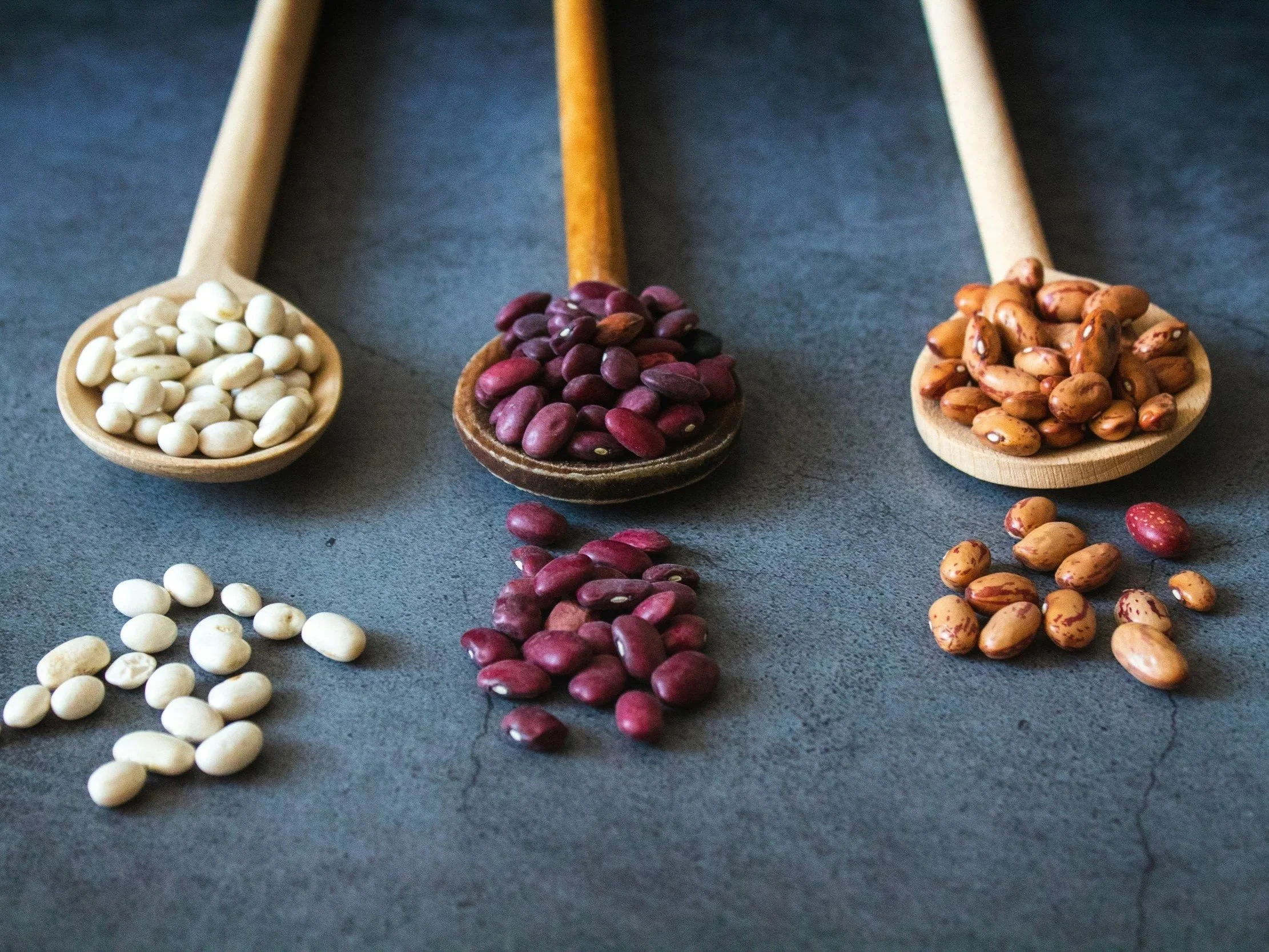
One reason I like black beans is their dark seed coat. That colour comes partly from anthocyanins, the plant compounds responsible for red, purple and blue pigmentation in many foods. In a 2021 study published in Foods, researchers grew 255 common bean lines under identical conditions and found that beans with coloured coats were more efficient antioxidants than white-coated ones, with black coats carrying the highest anthocyanin content of any group.
So black beans are a great default, but you do not need to turn bean shopping into another nutrition competition. Kidney, cannellini, navy and pinto beans can all have a place.
Are beans filling?
Yes, and this is worth clearing up.
Beans contain both protein and fiber, two components associated with satiety. A systematic review and meta-analysis published in Obesity pooled nine trials and found that meals containing pulses produced 31% greater fullness than control meals, although they did not significantly change how much people ate at the following meal.
So the reason I pair beans with another protein is not because beans cannot keep you full. It is that if your goal is a meal with a substantial amount of protein, simply increasing the bean portion also substantially increases the carbohydrate portion.
That is a meal-building distinction, not an indictment of beans.
Can vegetarians and vegans use beans as their protein?
Absolutely. Beans are a valuable source of plant protein.
But if you are trying to reach a particular protein target, it can be more practical to combine them with a more protein-concentrated food rather than eating two or three cups of beans.
Tofu. A concentrated plant protein that works beautifully with beans.
Tempeh. A fermented soy food that provides substantial protein.
Edamame. Whole soybeans that contribute both protein and fiber.
Plant protein powder. Useful in a smoothie or another meal when meeting protein needs entirely through whole-food plant sources becomes difficult.
Hemp hearts. An easy way to add some additional protein and Healthy Fat.
For vegetarians, eggs, Greek yogurt and cottage cheese can also make it easier to increase protein without adding another large carbohydrate source.
The point is not that beans and rice is bad. It is not. The point is that if your meal already contains beans, rice, quinoa or tortillas, look at the entire plate and ask whether you also have enough Quality Protein for your needs.
How many beans should you eat?
For most meals, ½ to 1 cup cooked beans is a practical starting range.
Your portion can be larger or smaller depending on your appetite, activity, goals and what else is on your plate. In the Eat Shed Glow® Method, if beans are your Complex Carb, build the rest of the meal around your Quality Protein, Non-Starchy Veggies and Healthy Fats.
And if you love beans, eat your beans. The goal is not to make another food scary. It is to understand what you are eating well enough that you no longer have to guess.
Here is my guide to how to cook perfect beans, including soaking, seasoning and how to make them actually taste good.
Eat Shed Glow® for people done with guessing
If you read this and thought "I had no idea beans counted as a carb," that is not a knowledge problem. It is that nobody ever taught you how a plate works, and every diet you have tried gave you a list of foods instead.
That is what I do. The Eat Shed Glow® Method is 1:1 coaching and a personalized Roadmap built around what you actually eat, so you stop looking things up and start knowing.
🤎
Want tips in your inbox? Sign up for The Monthly Newsletter. No BS, only the good stuff.