What to Eat (and Avoid) at the Airport.
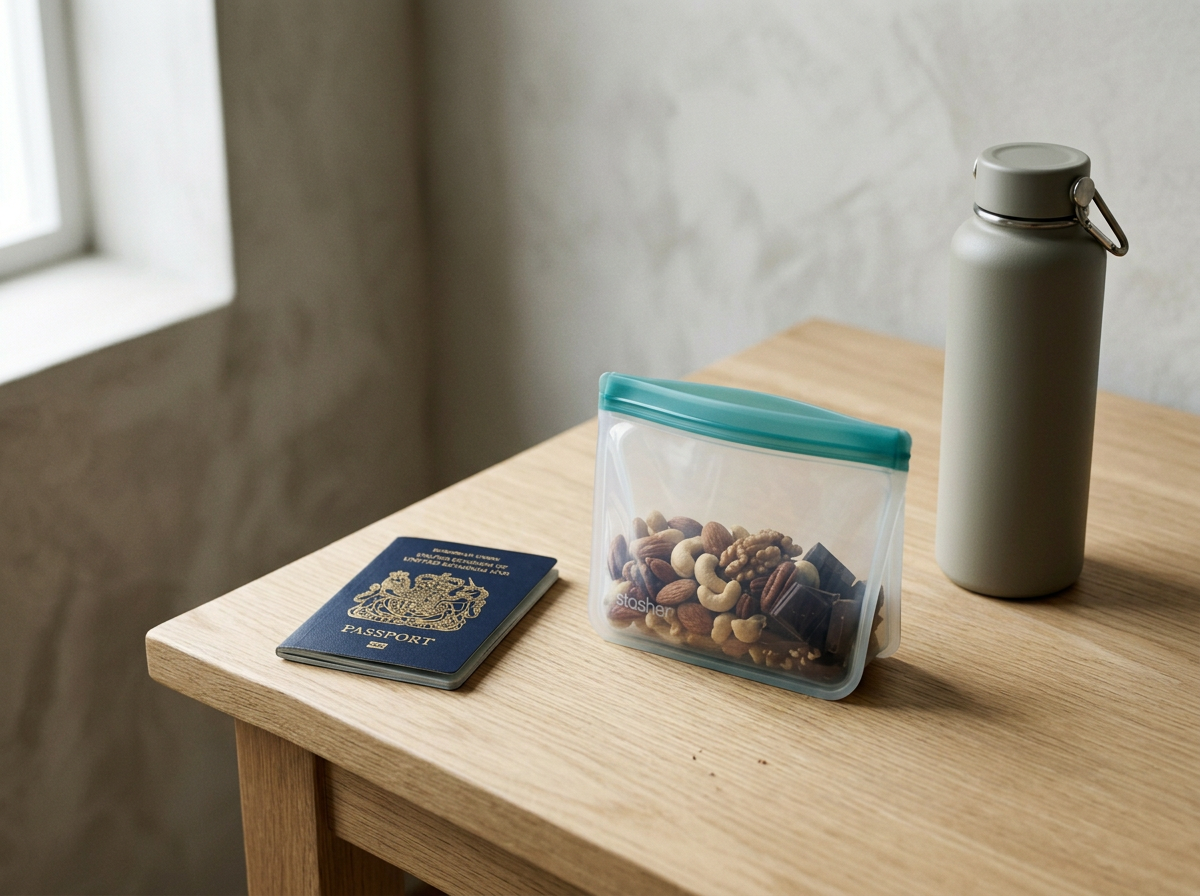
Travel throws off your rhythm, but it does not have to derail your nutrition.
Even if you packed nothing, there are smart choices in every terminal that keep you satisfied, beat the bloat, and hold your blood sugar steady so you are not grazing from gate to gate.
Here is exactly what to look for, and what to skip.
How do you eat well at the airport without packing snacks?
Lead with water and protein, and let whole food do the rest. Four moves cover almost everything.
Start with hydration. Airports and flights are dehydrating, and dehydration reads as hunger, so it has you craving sugar and salt before you have even boarded. Water or sparkling water, and skip the soda, juice and sweet coffee drinks. Better still if you travel with electrolytes.
Choose protein and fat over carbs. Hard-boiled eggs, cheese, plain yogurt, jerky, or grilled nuggets at Chick-fil-A when that is what is available. These digest slowly and hold you for hours instead of minutes.
Pick real food, not snack food. A yogurt parfait beats a bag of trail mix with candy in it. An apple with a pack of nuts beats a protein bar that is a candy bar in disguise.
Build a balanced box. If there is a build-your-own option, take vegetables, hummus, eggs and a few nuts. Skip the granola bars, sweetened yogurts and refined crackers.
What should you avoid at the airport?
The traps are the foods dressed up to look healthy.
Smoothies with added juice or sugar. Coffee drinks loaded with syrup, when black coffee or coffee with full-fat milk does the job. Veggie chips, which are fried starch in a green bag. Low-fat anything, which is usually sugar filling the gap. And muffins, bagels and croissants, which are cake without the frosting.
What can you actually grab at the airport?
Plenty, once you know where to look.
At Starbucks: the protein box with eggs, cheese and fruit, skipping the muffin or pretzels. Plain oatmeal with nuts and no sweet toppings. Egg bites. Unsweetened tea, or coffee with full-fat milk. Packaged almonds or mixed nuts.
At Chick-fil-A: twelve grilled nuggets, or thirty if you are sharing, with mayo and a side kale salad.
At Pret or any grab-and-go: salad with chicken, egg or tuna. Broth-based soup rather than creamy or starchy. A hummus and vegetable box. Plain full-fat Greek yogurt. Boiled eggs.
At Hudson News or a convenience store: hard-boiled eggs. Single-serve nuts, almonds, pistachios or cashews, but not trail mix. Beef jerky without added sugar. String cheese or cheese cubes. An apple or fresh fruit. Water, sparkling water, or a stevia-sweetened electrolyte.
What should you pack in your carry-on?
Bringing your own is always the better option. It costs less, you control the ingredients, and you are not stuck choosing between overpriced ultra-processed snacks at gate 42.
Pack two to four of these, eat them with plenty of water, and remember you can have a proper meal once you land.
A quality protein bar. Single-serve nuts or almond butter. Shelled lupini beans. Dark chocolate at 70% or higher. Seaweed snacks. Pre-packed olives. Grass-fed jerky. Boiled eggs. Cheese sticks.
The travel snacks I actually pack are in my pantry in Coco’s picks.
The part that matters more than the terminal
None of this works if you arrive at the airport starving.
Eat a proper meal before you leave, with protein and fat in it, and the entire terminal becomes easy to navigate. Arrive hungry and every decision gets made by your blood sugar instead of by you. That is what strategic snacking is for, and it applies to travel days more than any other.
The airport is just the first leg. For the rest of the trip, here is how not to gain weight on vacation.
🤎
Want tips in your inbox? Sign up for The Monthly Newsletter. No BS, only the good stuff.