How Much Protein Do You Actually Need?
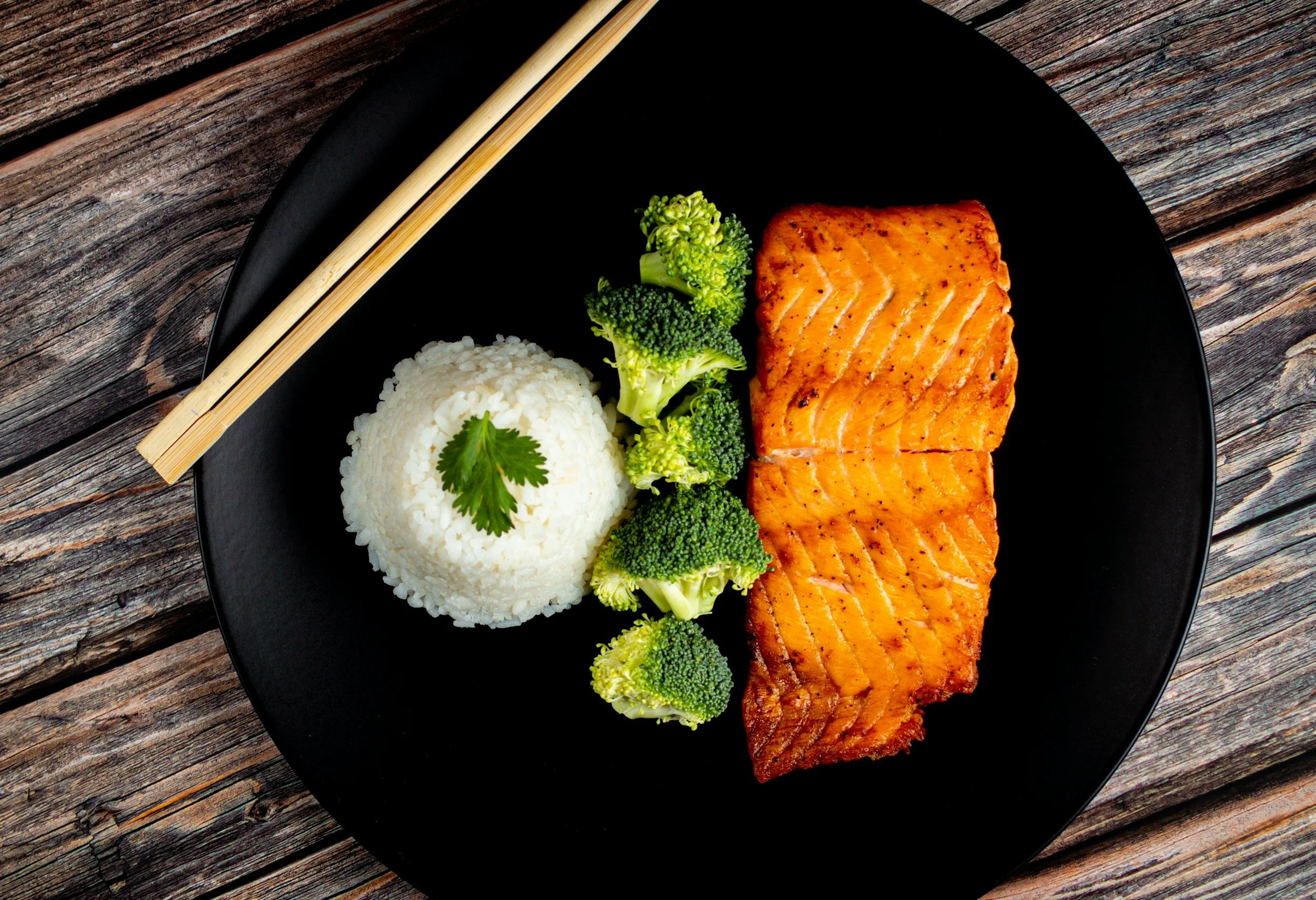
Protein changes the equation. It slows the glucose spike, tells your brain you are full, and holds your energy steady for hours.
But most people are eating a fraction of what they actually need and wondering why nothing is working. Here is exactly what enough looks like.
How much protein do you actually need per day?
Considerably more than you were told, and the official guidance just caught up.
For decades the federal RDA sat at 0.8 grams per kilogram of body weight, which put a 150-pound adult at around 55 grams a day. The 2026 revision raised that to 1.2 to 1.6 grams per kilogram, taking the same person to roughly 80 to 110 grams.
Where I land my clients is a little higher: roughly 0.7 to 1 gram per pound of body weight, which puts most adults between 100 and 150 grams a day. That is the range that actually protects muscle while you are losing weight, rather than simply preventing deficiency.
How much protein per meal?
At least 30 grams per meal, three meals a day, scaling to 40 or 50 grams for larger bodies and higher activity.
Forget the calculators. You do not need to weigh your food or do math at the dinner table. You need one visual: protein takes up a quarter of your plate, one palm-sized portion.
A larger body has a larger palm, so the portion adjusts itself. That is the entire point of the method.
Most people are landing at 10 to 15 grams per meal and calling it done. That gap is exactly where cravings, energy crashes, and stalled weight loss live.
And it applies to every meal, not just dinner, which is where most people finally get around to eating protein. Breakfast. Lunch. Every time you sit down.
Can your body actually use more than 30 grams at once?
Yes, and this is one of the most persistent myths in nutrition.
The idea that anything above roughly 25 or 30 grams is wasted came from older studies that only measured a short window after eating. More recent research following people over a longer period found the body continues using protein well beyond that ceiling.
So the practical answer: front-loading a large protein breakfast is not wasted effort, and a bigger dinner is not pointless. Spreading protein evenly across three meals is still the easier way to hit your total, but you are not throwing anything away by eating a substantial portion at once.
What does 30 grams of protein actually look like?
Roughly a palm-sized portion of any of these:
5 ounces of chicken, salmon, steak, or ground turkey
4 to 5 eggs, or 3 eggs plus cheese
1 cup of cottage cheese
1 cup of full-fat Greek yogurt with a scoop of protein powder
6 ounces of firm tofu or tempeh
1 to 1.5 scoops of a quality protein powder
One clarification I hold firmly. Lentils, chickpeas, and black beans are complex carbohydrates with some protein attached, not a protein anchor. A cup of lentils gives you around 18 grams alongside 40 grams of carbohydrate. They belong on the plate. They do not lead it.
How do you hit 30 grams at breakfast?
Breakfast is where almost everyone falls short, and fixing it changes the whole day.
Full-fat plain Greek yogurt with berries, nuts, and a scoop of collagen or protein powder
Three to four eggs with smoked salmon or cheese
One to 1.5 scoops of protein powder blended into a smoothie
A 20g+ protein bar with a handful of nuts when the morning is rushed
Lead with protein and you steady your blood sugar from the first bite, which is what quiets the 3pm crash before it happens.
The protein powders and bars I actually recommend are in Coco's Picks: Protein. Some links are affiliate links, which means I may earn a commission at no additional cost to you.
The Eat Shed Glow® Meal Builder
No food scale. No tracking app. Just a plate built to do what it is supposed to do.
One palm-sized portion of quality protein: salmon, chicken, steak, ground turkey, eggs, tofu
Half the plate non-starchy vegetables: greens, broccoli, peppers, zucchini, cabbage
A cupped handful of complex carbs: quinoa, sweet potato, rice, oats, sourdough
A thumb of healthy fats: olive oil, avocado, nuts, seeds
Build that shape and the protein takes care of itself. It works at home, at a restaurant, and in an airport, which is the whole reason I teach it visually rather than numerically.
How much protein do you need on a GLP-1?
The same 30 gram minimum, and it matters more rather than less.
When appetite is suppressed, protein stops happening by accident. If you can only manage half a meal, the half you eat should be the protein, because a much larger share of the weight lost comes from lean mass without it. Full guidance here: GLP-1 Nutrition Support.
What about after 40?
Higher, not lower, and this is the opposite of what most women are told.
Estrogen decline reduces how efficiently your body builds and maintains muscle, which raises the requirement at exactly the age most people start eating less. Aim for the upper end of the range. Here is what else changes.
Can you eat too much protein?
For most healthy adults, no. The kidney concern applies to people with existing kidney disease, which is a conversation for your doctor.
The far more common problem in my practice is the opposite. If you want the case for why protein is the one trend worth following, and which protein products to avoid, read: The Truth About Protein for Weight Loss.
The bottom line
More protein does not mean more complexity. It means building your plate around the one thing that actually keeps you full, protects your metabolism, and makes weight loss possible without fighting your own biology every day.
One palm. Every meal. Start there, and everything else follows.
🤎
Want tips in your inbox? Sign up for The Monthly Newsletter. No BS, only the good stuff.