Is Your Salad Sabotaging Your Weight Loss?
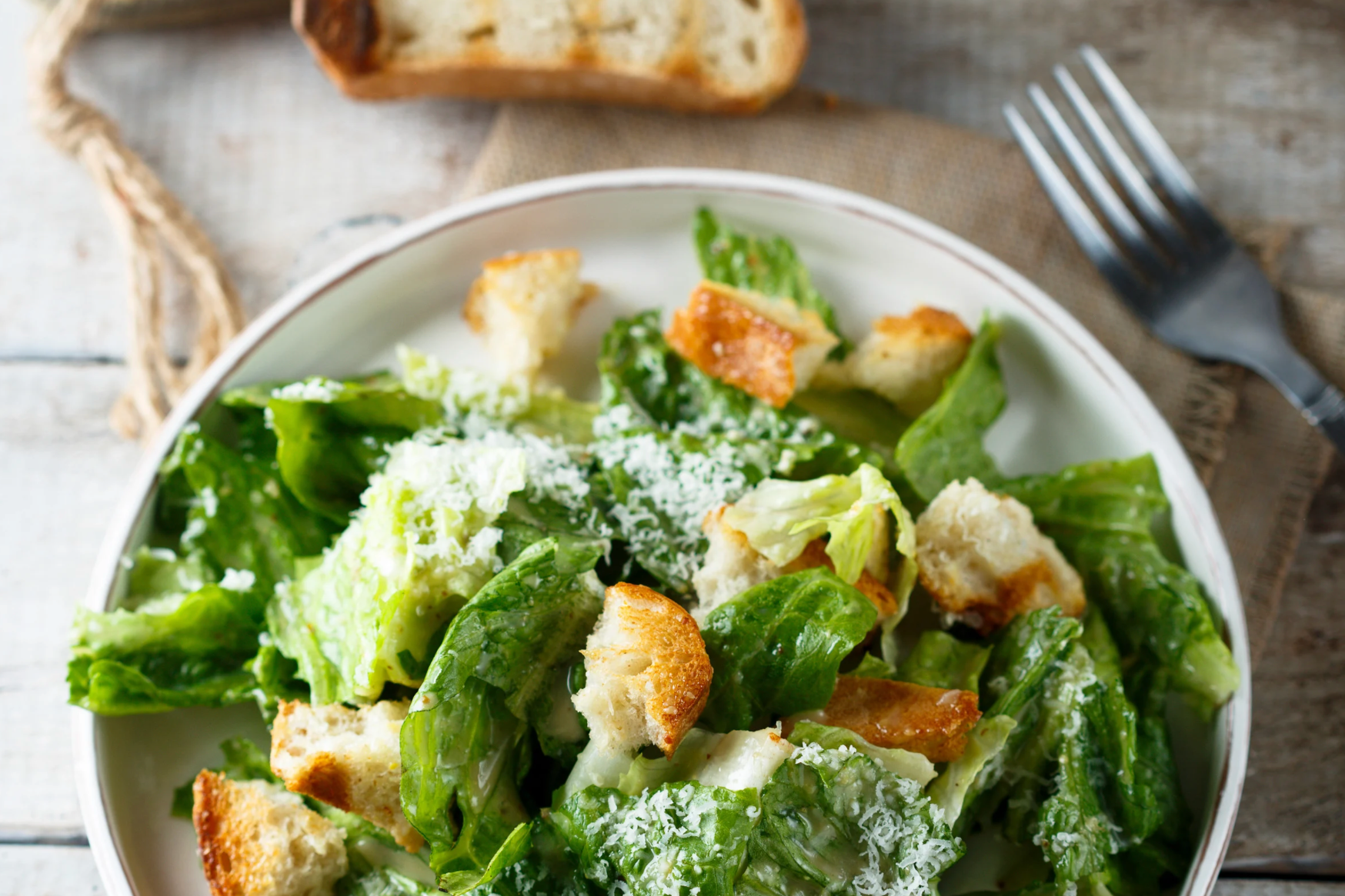
You ordered the salad. You skipped the fries. You did everything right, and yet an hour later you are foggy, hungry, and eyeing the snack drawer.
If that sounds familiar, here is the reassuring part. Your salad is not failing you because you lack discipline. It is failing you because it was never built to hold you.
I was recently featured in SheFinds on the biggest mistakes people make when they are trying to lose weight. The healthy salad is the one I could talk about all day, because it is where good intentions quietly fall apart.
Why does a healthy salad leave you hungry?
Because most salads are built almost entirely on carbohydrates and water, with nothing in them that actually holds you.
Picture a salad with romaine, cucumber, tomato, a scoop of chickpeas, something crispy on top, and a honey dijon dressing. It sounds like genuinely good food. But if that bowl lands at 9 grams of protein, 20 grams of sugar, and inflammatory oils you never saw coming, it is not really a healthy meal. It is a dish pretending to be one.
It is the same mechanism at work with refined carbs in general, which is why bread is not the enemy but the blood sugar spike behind it matters more than the calorie count.
What is the biggest salad mistake?
Not enough protein. It is the single reason most salads fail.
A salad with no real anchor, a grain bowl built on quinoa and beans, a wrap with hummus and greens. These feel responsible, but your body burns through them in under two hours. Blood sugar spikes, then crashes, and the cravings that follow are relentless.
Protein is what holds you, and most healthy salads have a fraction of what they need. And one clarification I hold firmly: chickpeas and beans are not the protein anchor. They are carbohydrates with some protein attached. They belong in the bowl. They do not do the job that eggs, chicken, salmon, or shrimp do. Here is how much protein you actually need.
Is your salad dressing the real problem?
Very often, yes. Most bottled and restaurant dressings are made with inflammatory soybean, canola, or sunflower oil and loaded with added sugar.
I call these Sugar Bombs, and they hide in nearly every salad that is supposed to be healthy. A light balsamic vinaigrette may have been stripped of fat, but it can carry up to 20 grams of sugar. You might as well pour a cookie over your greens.
The same goes for candied walnuts, dried cranberries, and glazed croutons. Sugar on sugar, over a little lettuce, with barely any real protein to hold you.
Does under-eating at lunch help you lose weight?
No, and this is the mistake that feels the most disciplined while backfiring the hardest.
When you under-eat at lunch to save room for dinner, you arrive at dinner running on empty. You eat fast, you eat more than you planned, and the strategy meant to help you does the exact opposite. Then you go to bed feeling like you failed, when what actually happened is your body did what a hungry body does.
What does a salad that actually holds you look like?
Built in four layers, and none of it requires eating less or feeling deprived.
Start with two to three cups of non-starchy vegetables. Greens, cucumber, zucchini, peppers. Fiber that fills you up, steadies your blood sugar, and crowds out what was working against you.
Double the protein. Grilled chicken, salmon, shrimp, eggs, or tofu, enough to hit at least 30 grams. That is roughly 5 ounces of chicken or salmon, or two eggs on the side of whatever is already there. Most salads sit at half that, and that gap is exactly where weight loss stalls.
Add a real fat. Half an avocado, a spoon of raw nuts or seeds, or a dressing made with avocado or olive oil and no added sugar.
Then decide on your carb. If you want the quinoa or the sweet potato, have it, a cupped handful rather than the whole bowl. Skip the candied, glazed, and dried-fruit toppings, since those are the ones giving you nothing back.
How do you order a salad at a restaurant?
Ask for two things and the whole plate changes: dressing on the side, and double the protein.
Dressing on the side turns a poured decision into a chosen one, and restaurant portions of dressing are typically far more than you would use yourself. Doubling the protein is usually a small upcharge and it is the difference between a salad that holds you until dinner and one that has you hunting for something at 4pm.
Then skip the crispy, candied, and glazed words on the menu. That is ordering from a place of knowledge, not restriction.
The takeaway
A truly healthy meal is not the one with the fewest calories. It is the one with enough protein, healthy fat, and fiber to carry you for hours and quiet your cravings without a fight.
When your salad is built right, the afternoon snack drawer stops calling, and the willpower struggle simply disappears. That is the foundation of the Eat Shed Glow® method: learning to build a balanced plate that works at your desk, in a restaurant, or on the go.
🤎
Want tips in your inbox? Sign up for The Monthly Newsletter. No BS, only the good stuff.