Dehydration Is Stressing You Out (And Stalling Your Weight Loss).
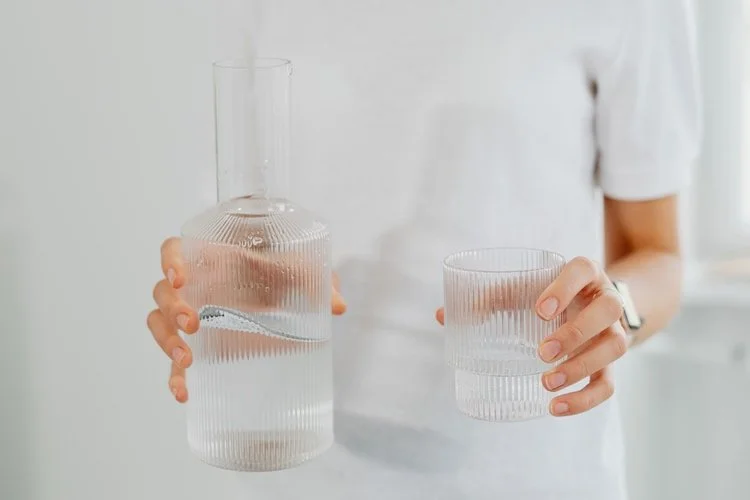
Cortisol is everywhere right now. Cortisol face, cortisol belly, a hundred supplements promising to balance it. Most of that is noise. But the idea underneath is real: chronic stress holds onto weight, and it is one of the major roadblocks I see in nearly every client.
Here is what almost nobody talks about. One of the simplest, cheapest ways to lower your stress load is not a supplement. It is water.
The short version
Low fluid intake raises your cortisol response to stress, and there is now direct evidence
Aim for 2 to 2.5 litres a day, more in heat or when you sweat
Thirst lags behind need, so watch urine colour instead
Electrolytes matter in specific situations, not as a daily requirement for everyone
A plateau is sometimes a digestion problem, not a fat loss problem
Does dehydration actually raise cortisol?
Yes, and there is now direct evidence for it. Dehydration is not a thirst problem. It is a stress problem.
A 2025 study in the Journal of Applied Physiology screened 62 healthy adults and pulled out the extremes: 16 people drinking about 1.3 litres a day, and 16 drinking about 4.4. Both groups were matched for the things that usually explain stress differences, including trait anxiety, then put through the Trier Social Stress Test, a mock job interview plus mental arithmetic.
Both groups reported feeling equally nervous. Both had similar heart rate increases. Only the low-fluid group's cortisol climbed, and their reactivity was more than 50 percent higher.
The mechanism is vasopressin, a hormone your body releases when it senses low water. It tells the kidneys to conserve fluid, and it also acts on the brain's stress system and pushes cortisol up. Run slightly dehydrated every day and you hand your body an invisible stressor on top of everything else.
The detail that stayed with me: the under-hydrated group did not report feeling any thirstier. Their bodies knew. They did not.
It is a small study, 16 per group, so treat it as a signal rather than the final word. But the mechanism is well established and the fix costs nothing. This is why hydration sits in Pillar 3 of the Eat Shed Glow® method, Optimize Your Lifestyle. It is the easiest stress lever to pull, and most people never pull it.
How much water should you actually drink?
Two to two and a half litres a day for most people, more in heat or when you sweat.
Front-load it. A full glass or two before coffee. Morning hydration sets the tone for the whole day.
Ignore thirst, watch colour. Thirst lags behind real need, which the study demonstrated neatly. Pale yellow urine is the goal. Dark means you are behind.
Spread it out. Two litres sipped across the day does more for you than two litres at 4 PM.
Do you actually need electrolytes, or is water enough?
For most people on an ordinary day, water is enough. Electrolytes earn their place in specific situations, and it is worth knowing whether yours is one of them.
Here is what is really happening. Water moves through your body by following salts, mostly sodium, across cell membranes. Your body already holds plenty of both and manages that balance without any help from a sachet. So the popular line that water passes straight through you unless minerals carry it in is not right, and I have said a version of it myself.
Where minerals genuinely matter is when you are losing them faster than you replace them: heavy sweating, hot weather, long workouts, a sauna habit, illness, or a lot of coffee and alcohol. In those situations, drinking large volumes of plain water can dilute what is left, and you end up feeling worse rather than better.
There is one more case that catches my clients specifically. If you have moved from packaged food to cooking real food, your sodium intake has dropped a long way without you noticing, because most sodium in the American diet comes from processed food rather than the shaker. Do that, then start training, and adding minerals back makes a real difference.
Magnesium and potassium are a separate story. Most adults fall short of both, and that is a food problem before it is a supplement problem. Leafy greens, beans, nuts, seeds, avocado, and potatoes do more than any powder.
And if you are reaching for salt specifically rather than fluid, that is usually a different signal altogether, which I break down in what your cravings are really telling you.
Can dehydration cause a weight loss plateau?
It can, and the reason is less glamorous than cortisol but just as real: fiber needs water to do its job.
Load up on fiber without enough water and things slow down rather than speed up, leaving you bloated, uncomfortable, and convinced you have hit a plateau. Often a plateau is not a fat loss problem at all. It is a digestion problem.
The fix is not eating less. It is drinking more, so the fiber you eat can actually move. Hydration and fiber are two halves of the same conversation, which is why getting your fiber right and getting your water right belong together.
What should you look for in an electrolyte?
Real sodium in a meaningful dose, plus potassium and magnesium, little to no sugar, and no artificial colours or fillers. Most of what is sold is sugar water with a wellness label.
Some links below are affiliate links, which means I may earn a commission at no additional cost to you.
Eat Shed Glow® approved brands that meet the bar:
LyteShow — unflavoured drops for anyone who wants to add minerals to water or a smoothie without changing the taste. The most flexible pick.
LMNT — the highest-sodium formula, best for hot days, workouts, sauna sessions, or anyone sweating a lot.
Ultima — the lightest option, lower sodium and magnesium-forward, best for easy daily sipping and anyone who wants flavour without much salt.
Re-Lyte — a full balanced mineral profile made with ancient sea salt, good enough for everyday use.
The bottom line
You do not need a $58 cortisol gummy. You need to remove the daily stressors quietly running in the background, and dehydration is one of the easiest to remove.
Hydrate properly and your body manages stress better, your cortisol settles, and weight loss stops fighting you. This is one piece of the bigger picture on why stress keeps weight on even when you do everything right.
Water first. Minerals when you have earned them. Every day, before you feel thirsty.
🤎
Want tips in your inbox? Sign up for The Monthly Newsletter. No BS, only the good stuff.