How to Cook Everything.
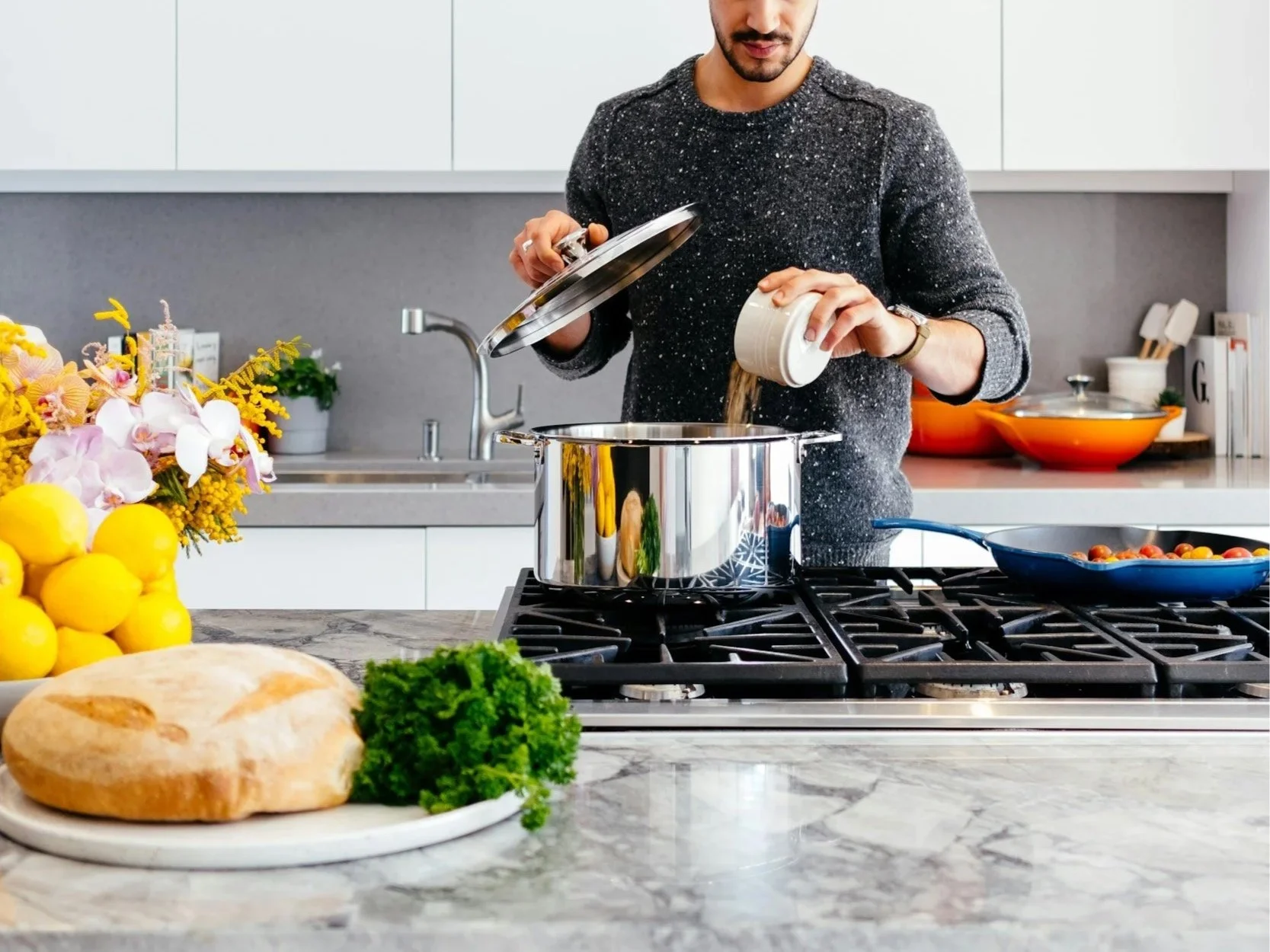
Healthy eating feels complicated because it has been sold to you that way. It is not.
Once you can cook a protein, a vegetable, a grain and a sauce, you can build any meal without a recipe. Four methods, endlessly recombined. That is the whole thing.
How do you cook protein without a recipe?
Pick a method, salt it, do not crowd the pan.
Roast at 400°F. Chicken thighs 25 to 30 minutes, salmon 12 to 15, a whole tray of meatballs 20. Hands off, and the oven does the work.
Sear in a hot pan with a little avocado oil. Chicken breast, steak, fish fillets. Do not move it for the first few minutes, that is how you get a crust.
Poach in barely simmering water. Best for shrimp, chicken you will shred, and eggs.
Batch whatever you cook. Double the tray. Cooked protein in the fridge is the difference between dinner and takeaway.
Aim for at least 30 grams per meal, which is roughly a palm-sized portion, and there is more on why in how much protein you actually need.
What is the easiest way to cook vegetables so they actually taste good?
Roast them hot and stop being timid with the salt.
Roasting is the one that converts people. 425°F, cut everything the same size, toss in olive oil, salt properly, single layer on the tray. Broccoli, cauliflower, Brussels sprouts and carrots all go sweet and crisp at the edges.
Sautéing takes five minutes. Hot pan, oil, garlic, greens, done.
Raw counts. Cucumber, peppers, radish, cabbage. Sliced thin with lemon and salt is a real side dish.
Steaming then dressing while still warm is underrated. Warm vegetables absorb dressing, cold ones repel it.
Half your plate should be non-starchy vegetables. That is what fills you up.
How do you cook grains and legumes properly?
Salt the water, and cook more than you need.
Rice, quinoa, barley, farro and lentils all follow the same shape: rinse, simmer, rest off the heat with the lid on. That resting step is what stops them going gluey.
One trick worth knowing: cook them, cool them completely, then reheat. Some of the starch converts to resistant starch, which behaves more like fiber. Yesterday's rice is genuinely better for you than today's.
Keep grains to about a quarter of your plate.
What sauces and dressings should you know?
Three, and they cover almost everything.
Vinaigrette. One tablespoon olive oil, 1.5 teaspoons lemon juice or vinegar, salt, pepper. Whisk in Dijon if you like.
Tahini sauce. Tahini, lemon, water, garlic, salt. Loosen with water until it pours. Good on everything roasted.
Yogurt sauce. Full-fat yogurt, lemon, herbs, salt. Cooling, high in protein, works with any spiced protein.
Fat is what makes food satisfying rather than merely finished. A meal without it leaves you hunting an hour later.
How do you put it together without a recipe?
Half the plate non-starchy vegetables, a palm of protein, a quarter grains, and fat to dress it.
That is the first pillar of the Eat Shed Glow® method, building visually balanced meals. No tracking, no weighing, no apps. Once you see the plate, you can rebuild it anywhere, including a restaurant.
The BASICS section of the recipe blog is built exactly this way. Each recipe covers one component rather than a whole meal, organised by quality protein, non-starchy vegetables, complex carbs and healthy fats, so you can mix and match rather than follow instructions.
Frequently asked questions
Do I need to follow recipes to eat well?
No. Recipes are useful for learning a technique, but the goal is knowing the method so you can cook whatever is in the fridge.
What temperature should I roast vegetables at?
425°F for most. Hot enough to caramelise the edges rather than steam them.
How do I make vegetables taste better?
More salt, more heat, and an acid at the end. Lemon or vinegar over roasted vegetables changes everything.
How much of each thing goes on the plate?
Half vegetables, a quarter protein, a quarter complex carbs, plus a serving of healthy fat.
Can I cook once and eat all week?
Yes, and it is the single most useful habit. Batch a protein, roast a tray of vegetables, cook a pot of grains, make one sauce. That is four dinners.
🤎
Want tips in your inbox? Sign up for The Monthly Newsletter. No BS, only the good stuff.