The New Food Pyramid Is Better. That Doesn't Mean You Should Trust It.
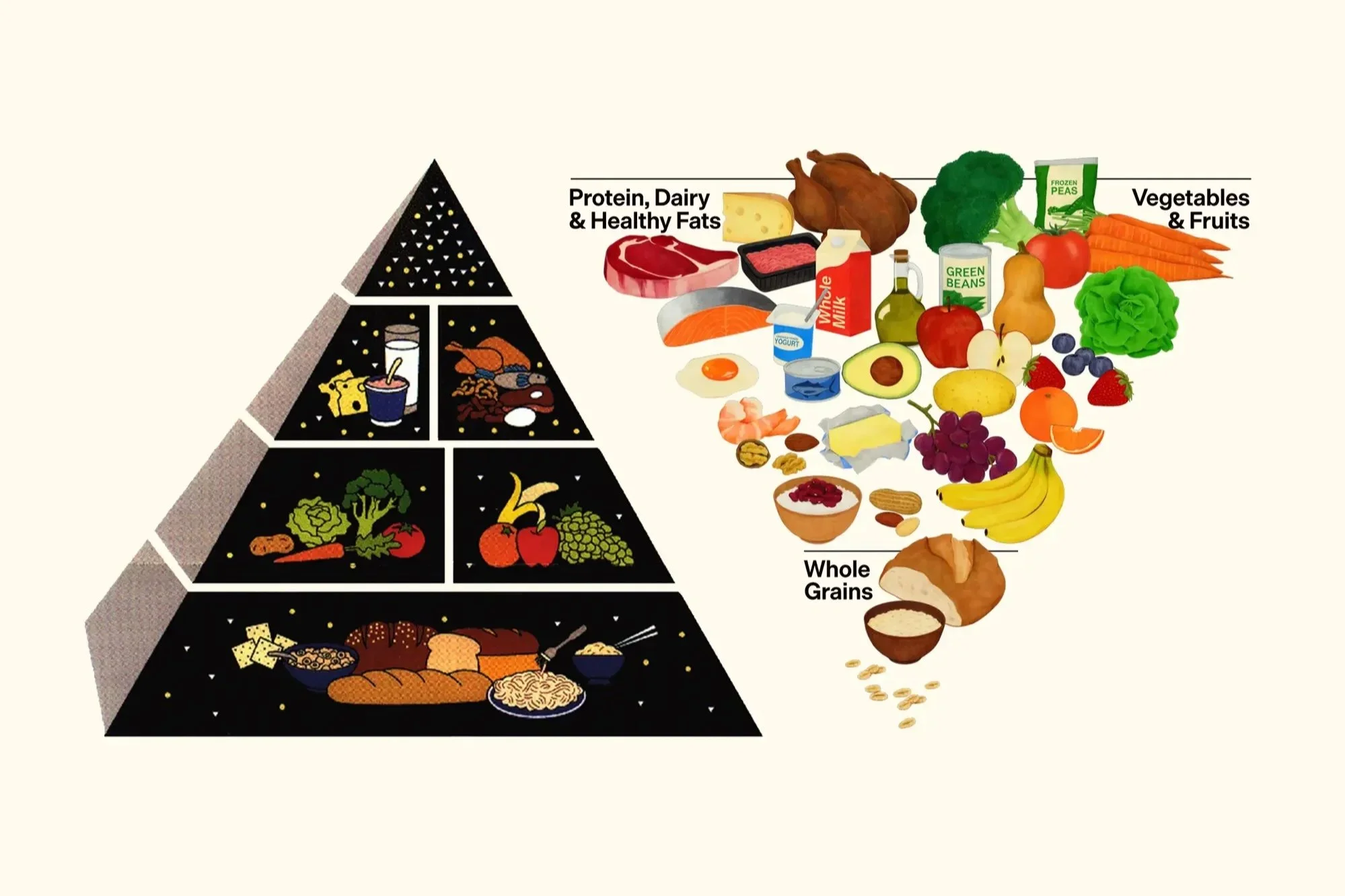
1980 Food Pyramid (Left) | 2025 Food Pyramid (Right)
The U.S. government released new dietary guidelines, and for the first time in decades they actually make some sense.
Highly processed food is finally called out by name. Protein recommendations went up. Full fat dairy is back. The low fat era is officially over.
Sounds great. So why aren't we celebrating?
Why be skeptical of the new dietary guidelines?
Because we have been here before, and the same institutions wrote both versions.
These are the people who told us fat was the enemy. Who pushed margarine over butter. Who demonized eggs for decades. Who built a pyramid with bread and cereal at the base and then wondered why America got sick.
These are the same people who let the sugar industry fund research blaming fat for heart disease. Who allowed tomato paste on pizza to count toward the vegetable requirement in school lunches. Who kept corn syrup cheap through subsidies while real food got expensive.
The result is in their own document. Nearly 90% of American healthcare spending now goes to treating chronic disease, and most of it is not genetic destiny.
So yes, the new guidelines are better. But better than terrible is a low bar.
What did the new dietary guidelines get right?
Four things, and they matter.
Processed food is named. Not a vague note about limiting added sugars, but the first explicit call-out of highly processed foods in the history of the document.
Protein went up. The recommendation moved to 0.54 to 0.73 grams per pound of body weight, up from 0.36. That is roughly double, and it is closer to what actually keeps people full, protects muscle and steadies blood sugar. For what that looks like on a plate, read how much protein you actually need.
Full fat dairy is fine. The low fat yogurt and skim milk era is over. Whole foods work better in the body than the processed light versions of themselves.
Refined carbohydrates are targeted directly. White bread, packaged breakfast foods and flour tortillas are named rather than implied.
What did they still get wrong?
Saturated fat is still capped at 10% of calories, which contradicts the rest of the document. They put steak, butter and full fat milk at the top of the new pyramid and then kept a limit that makes eating that way nearly impossible. Fat from an avocado, a steak and a piece of cheese do not behave the same way in the body, and what you eat alongside them changes everything. A blanket number does not capture that.
Whole grains are still universal. For someone with insulin resistance, even whole grains can spike blood sugar. Not everyone thrives on them.
Dairy is recommended for everyone, when a significant share of the population does not digest it well.
It is still built on averages. The guidelines assume every body works the same way. They do not. We can personalize nutrition now, and policy has not caught up.
Will the food industry exploit the protein recommendation?
It already is, and we have seen this exact film before.
The guidelines say eat more protein, and the industry hears slap protein on anything and call it healthy. Protein cookies. Protein sodas. Protein coffee drinks with more sugar than a candy bar.
This is precisely what happened with fat. When fat was demonized, companies stripped it out and replaced it with sugar and refined starch so the food still tasted like something. Calories went up. Metabolic health got worse. Low fat became a marketing label rather than a health improvement.
Adding protein to a highly processed food does not turn it into health food. Protein does not cancel out added sugar, refined carbohydrate or a list of additives. Get it from eggs, meat, fish, chicken, Greek yogurt, cottage cheese and legumes, not from a sweetened drink with a claim on the front.
Flip the package over and read the first five ingredients. If the protein is propping up a chemistry experiment, the protein does not save it. For the products that actually pass that test, see the protein products worth buying.
So what should you actually do?
Take the guidelines as a step forward, not as gospel.
These are the same institutions that got it wrong for forty years, the same ones shaped by food industry money, the same ones that took decades to admit what common sense already said: real food beats fake food.
If they can flip the pyramid upside down that quickly, it is worth asking what else they told you with the same confidence.
Be skeptical rather than paranoid. Pay attention to how your body responds. Do your own reading. You do not need a government document to tell you how to eat, and critical thinking is one of the few things still entirely within your control. Protect it.
🤎
Want tips in your inbox? Sign up for The Monthly Newsletter. No BS, only the good stuff.