Why Walking Is the Best Friend of Fat Loss.
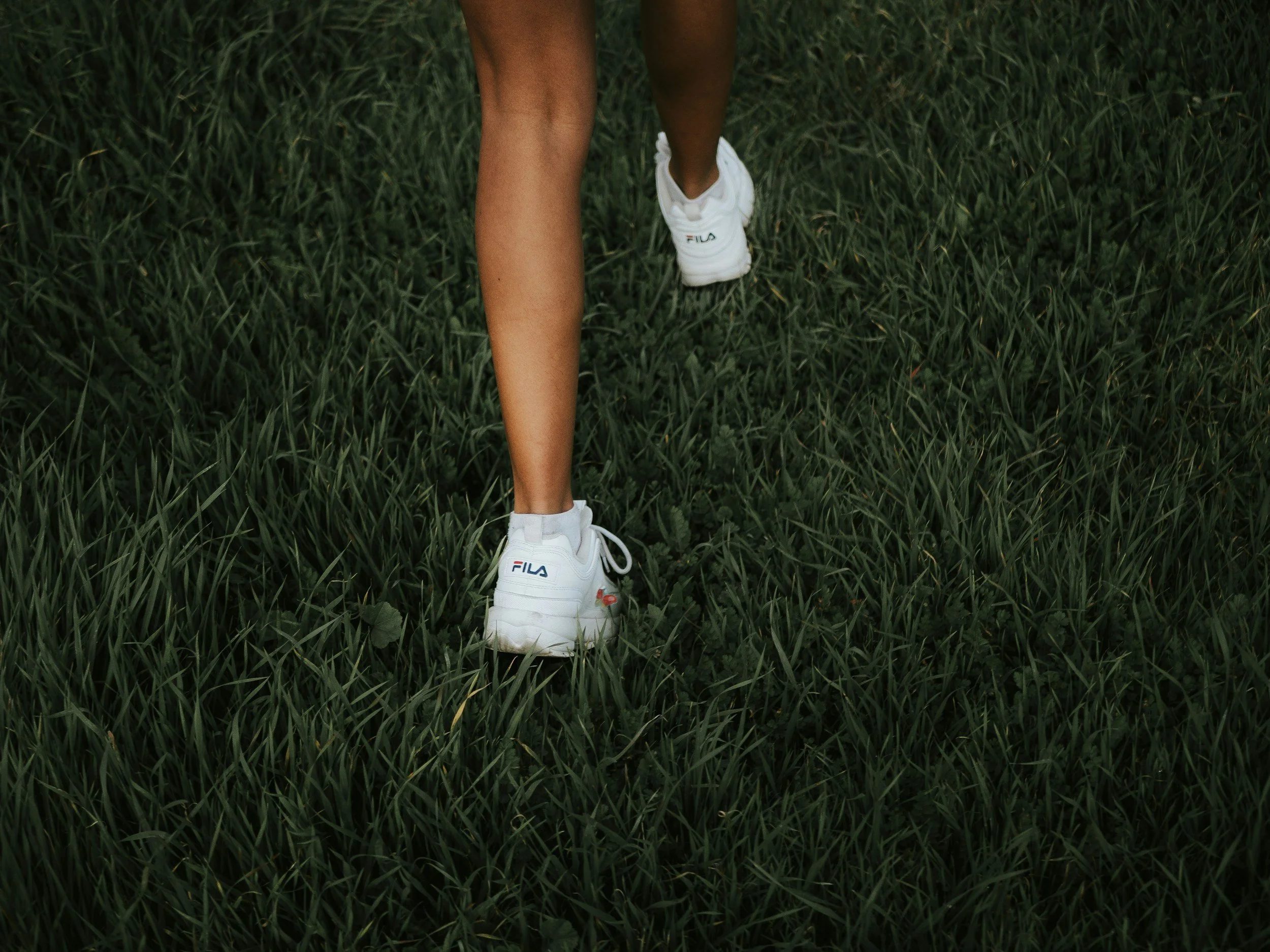
If you take one thing from everything I teach about movement, make it this: walking is the best friend of fat loss.
Not the boot camp. Not the 5am spin class you dread and skip by February. Walking. The thing you already know how to do, that costs nothing, and that almost nobody takes seriously because it feels too easy to count.
It counts. Here is why.
Why is walking so good for fat loss?
Because at a walking pace your body reaches for stored fat, while harder cardio reaches for sugar.
Your body chooses fuel based on how hard you are working. At a low, conversational intensity it draws heavily on fat reserves, because there is enough oxygen available to burn fat efficiently. Push into a hard class and the demand goes up, oxygen becomes the limiting factor, and your body switches to the faster fuel: glucose and glycogen.
That is why an hour of walking and an hour of high-intensity cardio are not interchangeable, even if the calorie readout looks similar. They are asking your body for different things.
Why does walking not make you hungry?
Because it does not empty your glycogen stores the way hard cardio does, so your body does not send you looking for sugar afterward.
This is the part most people have felt without being able to explain. You finish a punishing workout and you are ravenous an hour later, reaching for carbs. You finish a long walk and you feel good, clear-headed, and normally hungry at your next meal.
That difference is the whole reason walking works for weight loss when harder training sometimes does not. The best workout in the world stops working if it drives you to eat back everything you spent and then some.
What is NEAT, and why does it matter more than your workout?
NEAT stands for non-exercise activity thermogenesis, and it is the single most underrated number in weight loss.
It is everything you burn that is not sleeping, eating or formal exercise. Walking to the station. Taking the stairs. Pacing while on a call. Standing to cook. Carrying groceries. Fidgeting.
Here is why it matters so much. In 1999, researchers at the Mayo Clinic led by Dr James Levine overfed 16 adults by 1,000 calories a day for eight weeks. Same surplus, same duration, same conditions.
Fat gain varied tenfold between them.
The thing that predicted who stayed lean was not their workouts, their metabolism at rest, or their willpower. It was how much their NEAT went up. Some participants burned nearly 700 extra calories a day just through unconscious movement. One actually moved less. The correlation between NEAT and resistance to fat gain was 0.77, which in this field is enormous.
Levine's later work found that NEAT can vary by up to 2,000 calories a day between two people of similar size. And that adults carrying more weight tend to sit around two hours more per day than lean adults, which alone accounts for roughly 350 calories.
What this means for you. You cannot meaningfully change your resting metabolic rate. You can absolutely change your NEAT, and it is the largest variable lever you have. A 45-minute workout might buy you 300 calories. Restructuring your day so you move more without noticing can buy you considerably more, five to seven days a week, without ever booking a class.
That is the real argument for walking. Not the walk itself. The way it drags your entire baseline upward.
Does walking really burn enough to matter?
Yes, and the reason is volume rather than intensity.
A single walk is not dramatic. But walking is the one form of movement almost everyone can do daily, for years, without injury, burnout, or needing to psych themselves up. Something modest done every day beats something impressive done occasionally, and it is not close.
How many steps do you actually need?
Fewer than 10,000, and that number was never based on science.
The 10,000 figure came from a Japanese pedometer marketing campaign in the 1960s, not research. What the research since has consistently found is that meaningful benefits start well below that, and that the biggest gains come from moving off the bottom of the scale rather than reaching a magic ceiling.
Practically, what I tell clients: if you are currently at 3,000, get to 6,000. If you are at 6,000, aim for 8,000. The improvement that matters most is the one from wherever you are now, not the leap to a round number you will abandon.
Does it matter when you walk?
Yes, and one timing does more than the others: a ten minute walk after your largest meal.
Your muscles soak up glucose from your bloodstream while they are working. Walk shortly after eating and a meaningful share of that meal's sugar goes into your muscles rather than sitting in your blood, which blunts the spike and the crash that follows.
That is why the after-dinner stroll turns out to be doing real work rather than just being pleasant, and it is one of the highest-return ten minutes available to you. Beyond that, walk whenever you will actually do it. The best time is the time that survives a busy week.
What about the 12-3-30 workout?
It works, and it is a different thing from what I have been describing.
The protocol is 12% incline, 3.0 miles per hour, 30 minutes, created by Lauren Giraldo in 2019 and viral ever since.
A 2025 study in the International Journal of Exercise Science compared it against self-paced running, matched for total calories. Incline walking drew about 41% of its energy from fat, versus 33% for running. Running burned calories faster, roughly 13 per minute against 10, so the run took less time to reach the same total.
So the headline is fair: at an incline you burn a higher proportion of fat.
But two things are worth knowing. The researchers themselves noted that 12-3-30 may actually be too intense to maximise fat utilisation, and that lowering the speed or the grade would push it further into the fat-burning zone. Which is the same point I made earlier about intensity, just from the other direction.
And a 12% incline is genuinely demanding on the lower back, knees and Achilles. If you are new to it, start at 6 to 8% and build.
How I would use it. 12-3-30 is a workout. It belongs alongside your strength sessions, not instead of your daily walking. It does not replace NEAT, because NEAT is about your baseline across the whole day rather than one focused block.
Do it if you enjoy it. Just do not let it become the thing that makes you feel you have already walked today.
Is walking better than running for weight loss?
For most people trying to lose weight and keep it off, yes, and this surprises people.
Running is excellent for cardiovascular fitness and plenty of people love it. But it is higher impact, harder to recover from, drives appetite up more, and is far more likely to end in an injury that stops you entirely. Consistency beats intensity, and walking is the thing you can still do on a bad week.
If you love running, keep running. If you are choosing based on what will move the needle over a year, walking is the more reliable bet.
Do you still need strength training?
Yes, and this is where I want to be clear about what walking does and does not do.
Walking is exceptional for fat loss, blood sugar, stress, and consistency. It does not build or protect muscle, and muscle is what keeps your metabolism running, especially after 30 when we naturally start losing it.
So the pair works like this: walking handles the fat, resistance work protects the muscle. Neither substitutes for the other. That matters enormously after 40, when estrogen decline makes muscle harder to hold, and it matters just as much on a GLP-1, where a meaningful share of the weight lost can come from lean mass without protein and resistance work protecting it.
I am a nutritionist, not a trainer, so I will not write you a program. What I will say is that working your muscles against resistance a few times a week, in whatever form you will actually keep doing, changes what happens to your body composition.
How do you actually walk more?
Stack it onto things you already do rather than adding a new commitment. Every one of these raises your NEAT rather than adding to your schedule.
A walking pad under a desk is the single highest-return purchase I recommend. It turns calls, emails, and admin into thousands of steps you never had to schedule.
Walk the calls. Anything that does not need a screen can happen on your feet.
Get off one stop early, or park at the far end.
Walk after your biggest meal, ten minutes, non-negotiable.
Wear shoes you can actually walk in. Sounds obvious, and it is the reason a lot of people walk less than they think they do. These are the ones I wear.
Make it the thing you look forward to. A podcast, an album, a friend. My own walk is sacred and my daughter knows it.
The walking that works is the walking you do not have to negotiate with yourself about.
More gym and home equipment in Coco's Picks.
What walking will not fix
Your plate.
Walking supports fat loss, but it cannot outrun meals built on carbohydrates with no real protein anchor. If your blood sugar is spiking and crashing all day, no amount of steps closes that gap.
Movement is Pillar 4 of the Eat Shed Glow® method for exactly that reason. It sits alongside the plate rather than replacing it, and here is how much protein that plate actually needs.
Frequently asked questions
How much walking do you need to lose weight?
Aim to improve on where you are now rather than chasing 10,000 steps. Moving from 3,000 to 6,000 a day makes a real difference, and it is a target you will actually keep.
What is NEAT?
Non-exercise activity thermogenesis: everything you burn that is not sleeping, eating or formal exercise. It can vary by up to 2,000 calories a day between two people of the same size, which makes it the biggest variable lever most people have.
Is walking enough on its own?
For fat loss, it does a great deal. For protecting muscle and metabolism, you need resistance work alongside it, and neither replaces a balanced plate.
Does walking burn fat or sugar?
At a conversational pace your body draws more heavily on stored fat. Push the intensity up and it shifts toward glucose, which is part of why hard sessions leave you hungrier.
Is a walking pad worth it?
It is the piece of equipment I recommend most, because it removes the scheduling problem entirely. Steps you take during work are steps you never had to find time for.
When is the best time to walk?
Whenever you will do it consistently, with one exception worth building in: ten minutes after your largest meal.
Can you walk on a GLP-1?
Yes, and it is one of the better things you can do. Just eat enough protein alongside it, because appetite suppression plus movement without adequate protein is how lean mass gets lost.
🤎
Want tips in your inbox? Sign up for The Monthly Newsletter. No BS, only the good stuff.