How to Strength Train at Home.
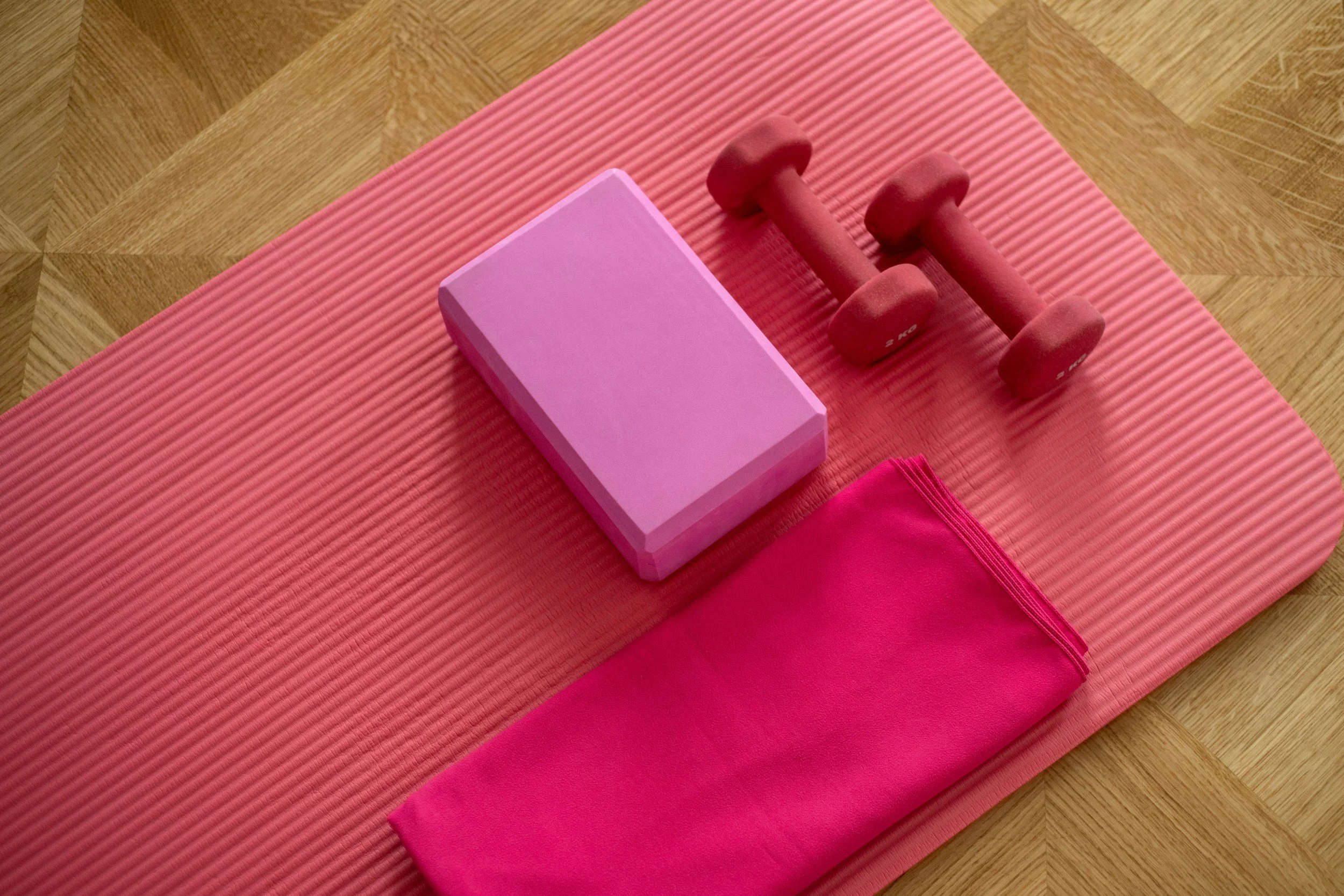
You do not need a gym to protect your muscle. You need a mat, a set of dumbbells, and about thirty minutes, two or three times a week.
That is genuinely it. And for most people the home version is the one that survives, because the gym version has a commute attached to it.
Why strength train at all?
Because muscle is the thing that decides how the next thirty years go, and you start losing it in your thirties without a reason not to.
It protects your metabolism during weight loss. This is the part that matters most and gets explained worst. Muscle does burn more at rest than fat, but the difference is modest, roughly six calories per pound per day against two. Gaining five pounds of muscle is worth perhaps twenty-five calories a day, not the fifty per pound the internet keeps repeating.
The real benefit is what you do not lose. In a calorie deficit without resistance training, a meaningful share of the weight coming off is muscle, and that is what actually slows your metabolism down. Lifting is how you make the loss come from fat instead.
It handles your blood sugar. Muscle is where most of the glucose in your bloodstream ends up. More of it, working regularly, means steadier blood sugar and fewer crashes.
It keeps your bones. Resistance work is one of the few things that maintains bone density, which matters enormously through perimenopause and after.
And it is non-negotiable on a GLP-1, where a substantial share of weight lost can be lean mass. More on that in Ozempic and muscle loss.
The full case, particularly after 40, is in strength training for weight loss.
How often, and how long?
Two to four sessions a week, thirty minutes each. Two is enough to hold what you have. Three is where most people see change.
You do not need to train every muscle every session, and you do not need a program written by anyone. What you need is to work your muscles against resistance, regularly, and to make it slightly harder over time.
What equipment do you actually need?
Four things, and only the first two are essential.
An exercise mat. Comfort on the floor, and it defines a space that is for training, which matters more than it sounds.
Dumbbells. Start with two or three pairs so you can go heavier as different exercises demand it. For most women, a light, medium and heavier set works, something like 5, 8 and 12 pounds. For most men, roughly double. The right weight is the one where the last two reps are genuinely hard.
Resistance bands. Cheap, they travel, and they add tension where dumbbells cannot.
A foam roller, optional, for recovery and the days when everything is tight.
That is a home gym. It fits in a cupboard and costs less than three months of a membership. Check out the latest gym gear in Coco's Picks.
Where to actually follow along
The hardest part of home training is not the equipment. It is deciding what to do once you are standing on the mat.
Follow someone. FitByMik and Royal Change with Sydney Cummings are both excellent, free, and structured so you press play and stop thinking about it. Sydney in particular programs full weeks, which removes the decision entirely.
The best program is the one where you do not have to plan anything.
The mistake to avoid
Going too light for too long.
The most common pattern I see is someone buying three-pound dumbbells, using them for a year, and wondering why nothing changed. Muscle responds to being challenged. If you can do fifteen reps comfortably and could keep going, the weight is too light.
You do not have to lift heavy. You do have to lift something that feels hard by the end of the set, and to increase it as it stops feeling hard.
And the part that decides whether it works
Protein.
Resistance training is the signal. Protein is the material. Train without eating enough and you are asking your body to build something without giving it anything to build with, which is exactly how people train consistently for months and see no change in how they look.
At least 30 grams per meal, which puts most adults between 100 and 150 grams a day. The full breakdown is here.
Walking handles the fat. Lifting protects the muscle. The plate makes both of them work.
🤎
Want tips in your inbox? Sign up for The Monthly Newsletter. No BS, only the good stuff.