How to Start Strength Training for Weight Loss After 40.
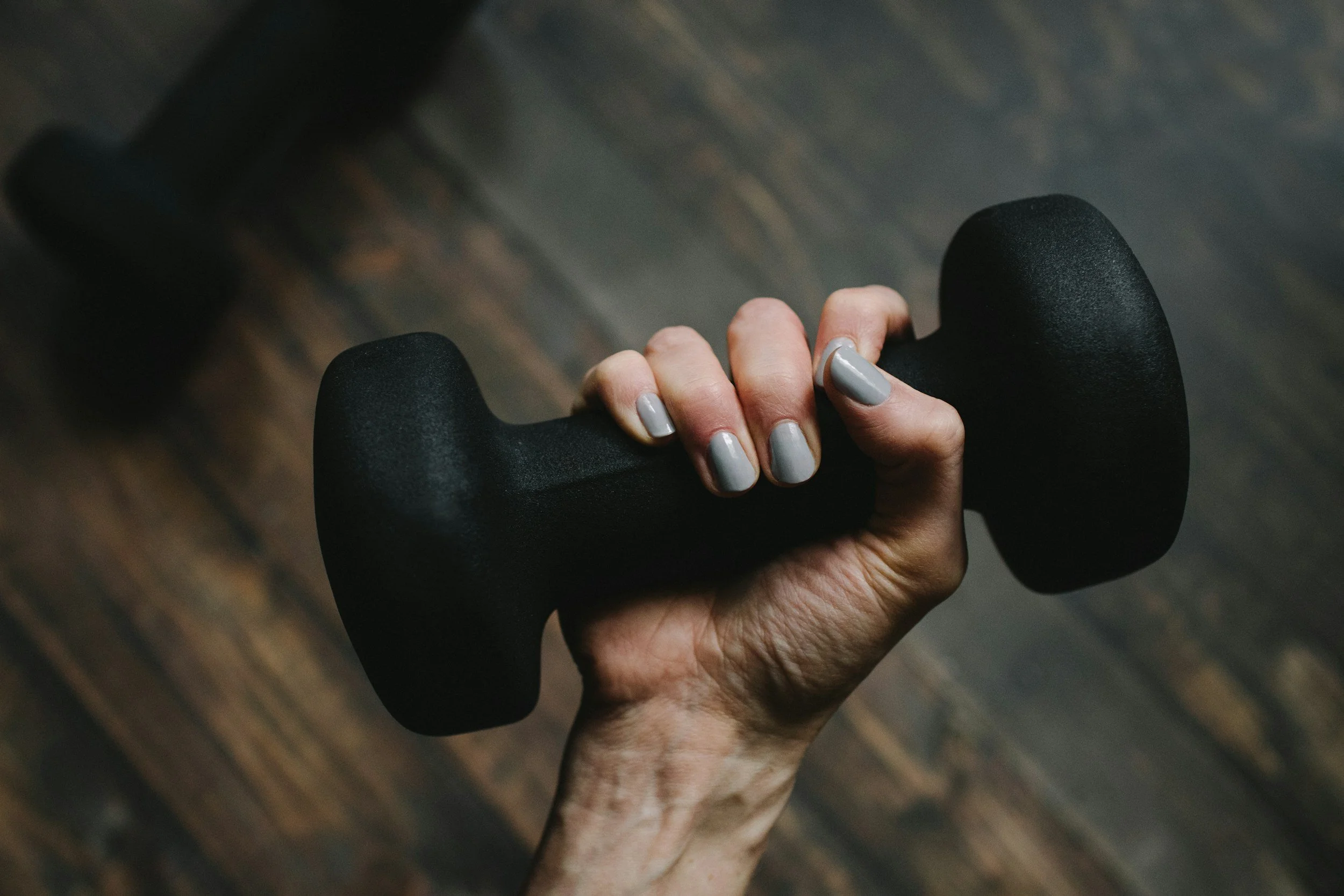
You did not get a slower metabolism. You lost the tissue that was running it.
Almost every client I see over 40, women and men both, arrives convinced something broke. What actually changed is muscle. We lose roughly 3 to 8 percent of it per decade after 30, and muscle is what keeps your metabolism running, your blood sugar steady, and your energy holding through the afternoon. Lose it quietly for ten years and the same food starts landing differently on the same body.
Here is the part nobody leads with: muscle is the one thing on that list you can rebuild at any age.
The short version
What changed after 40: muscle loss, not a broken metabolism
Why it matters: muscle burns more at rest and steadies your blood sugar
What rebuilds it: resistance work you will actually repeat
What feeds it: 0.7 to 1 gram of protein per pound of body weight, daily
Where cardio fits: keep it if you love it, it is just not the tool for this job
Why does weight loss get harder after 40?
Because you are losing muscle, and muscle is most of what people mean when they say metabolism.
Muscle is expensive tissue. It costs your body energy just to maintain, which is why it burns more at rest than fat does. As it declines, your body needs less, so the intake that held your weight at 32 quietly becomes a surplus at 45. Nothing broke. The engine got smaller.
For women, perimenopause adds a second layer. Falling estrogen shifts where the body stores fat, which is why so many people notice it settling around the middle for the first time. Men get a slower version of the same story, since testosterone declines roughly 1 percent a year from around 30 and it plays a direct role in holding onto muscle. Different hormone, same result: losing muscle at the same moment makes it land harder. More on that in weight loss after 40.
Does strength training actually help you lose weight?
Yes, though not mainly through the calories you burn during the session. That part is modest.
It works by changing what comes off. Lose weight without resistance work and a meaningful share of it is muscle, so you end up lighter with a slower engine, which is the setup for regain. Add resistance work and your body has a reason to hold the muscle and give up fat instead. Same number on the scale, completely different body underneath, and a metabolism that still works when you are done.
It also improves how you handle carbohydrates. Working muscle pulls glucose out of your bloodstream, which steadies blood sugar and quiets the crash-and-crave cycle behind most afternoon snacking.
Should you drop cardio to lift instead?
No. Keep whatever you love doing.
But if cardio has been your main weight loss strategy and it is not working, it helps to know why. Long, hard cardio can drive up both hunger and stress, and those work against you. Walking does neither. It is one of the best tools for fat loss and it does not leave you ravenous an hour later. Plenty of strength formats fold in cardio anyway through circuits and intervals, so this is rarely an either-or.
More here: walking vs running for weight loss and walking for weight loss.
What else does building muscle do after 40?
More than the scale shows.
Protects bone density, which matters more every year and especially through menopause
Steadies blood sugar and reduces cravings
Lowers visceral fat, the kind that sits around your organs
Improves posture, balance, and how your joints feel day to day
Supports better sleep and steadier mood
Makes ordinary life easier, which is the change people notice first
How much protein do you need to build muscle after 40?
Between 0.7 and 1 gram per pound of body weight per day, and this is the part most people get wrong.
Resistance work is the signal. Protein is the material. Give your body the signal without the material and very little gets built, which is why people train consistently for months and see almost no change. At 150 pounds that is roughly 105 to 150 grams a day. Do the math once for your own body and it explains a lot.
Spread it across the day rather than loading it all at dinner, and anchor every meal with a real protein source: eggs, fish, chicken, turkey, Greek yogurt, cottage cheese. Beans and lentils are wonderful food, but they are carbohydrates with some protein attached, so they support the plate rather than lead it.
Full breakdown here: how much protein you actually need.
Where should you start if you have never lifted?
Somewhere you will go back to. That matters more than which program you pick.
Programming is not my lane. I am a nutritionist, so I am not going to hand you sets and reps, and anyone recovering from injury should start with a professional. What I can tell you is that public health guidelines put resistance work at two or more days a week, and the people I see stick with it are the ones who picked something they did not dread.
Places my clients have had the most success. The first four are built around women's training, the middle three are neutral, the last two skew male, so there is a starting point here whoever you are.
Fit by Mik. Free YouTube, short beginner-friendly full-body sessions with dumbbells.
Evlo. Built by Dr. Shannon Ritchey, a Doctor of Physical Therapy, and taught entirely by DPTs. Designed to build muscle without wrecking your joints, which makes it one of the smartest options after 40 or around an old injury.
FORM by Sami Clarke. Strength and pilates in 30 minutes or less.
The Sculpt Society. Strength mixed with dance cardio.
Fitbod. Builds a gym or home plan around your goals and equipment.
A few 1:1 sessions. Worth it for form, or if you are working around an old injury. Virtual counts.
ATHLEAN-X and Jeff Nippard. Free, science-backed, form-focused muscle building.
A local class. Pilates, small group, CrossFit. The accountability is the point.
Two or three of these will not suit you at all. That is fine. Pick the one you can imagine doing on a Tuesday you do not feel like it.
Frequently asked questions
Is it too late to build muscle after 50 or 60?
No. Muscle responds to resistance work at every age studied, including in adults well into their seventies and eighties. The rate is slower than at 25, but the direction is the same.
Will lifting make me bulky?
No. Building visible size takes years of deliberate training and a calorie surplus. What most people notice instead is that the same body weight looks and feels different.
How long before I see a change?
Strength usually improves within a few weeks, largely through the nervous system before any real muscle is added. Visible change takes closer to two to three months, and it arrives faster when protein is genuinely high enough.
Do I need a gym or equipment?
No. Bodyweight work and a set of adjustable dumbbells cover a lot of ground at home. Equipment makes progression easier later, not starting easier now.
Should I lift on a GLP-1?
This is exactly when it matters most, because these medications make it easy to under-eat protein while losing weight quickly. See how to keep the weight off after stopping Ozempic and Wegovy.
🤎
Want tips in your inbox? Sign up for The Monthly Newsletter. No BS, only the good stuff.