Peptides for Weight Loss?
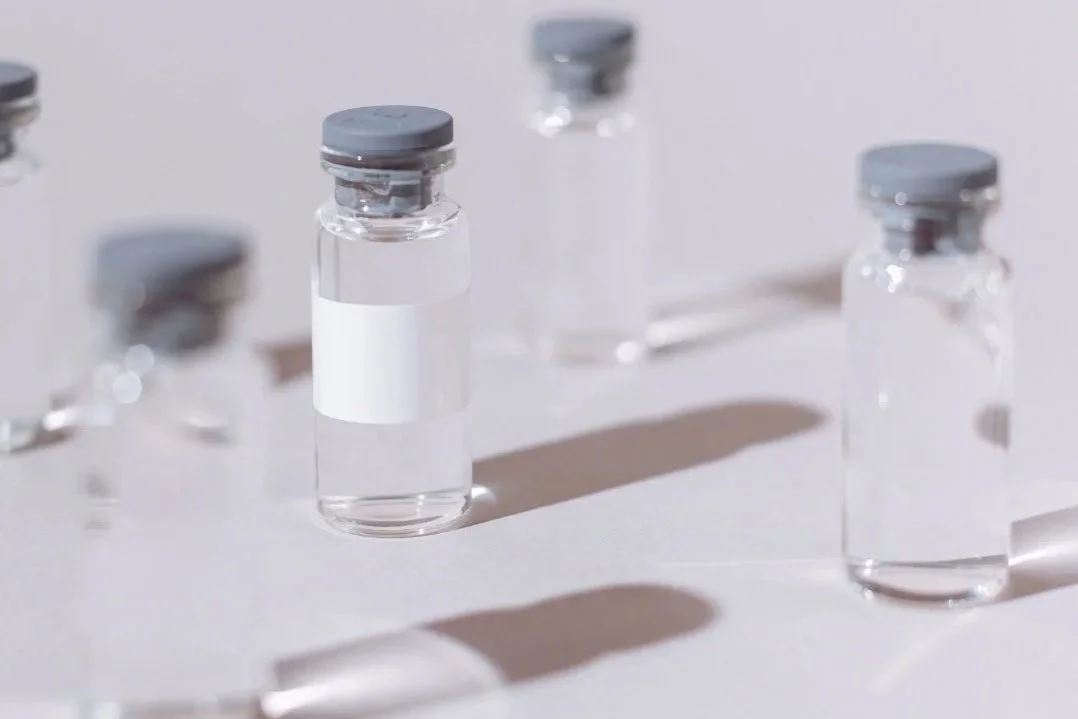
The July 2026 advisory committee votes remain non-binding. No peptide beyond the GLP-1s is FDA-approved for weight loss.
Move over Ozempic. The conversation is getting bigger, and as of last week it is also getting a lot more complicated.
If you have been anywhere near the internet, a doctor's office, or a dinner party in the last two years, you have heard about GLP-1 medications. Ozempic. Wegovy. Mounjaro. The weight loss drugs that took over Hollywood and then everyone's group chat.
But here is what most people do not realize: GLP-1s are just one type of peptide. There is a whole category beyond them being explored for weight loss, recovery, and metabolic health, with wildly different levels of evidence behind each one.
Let me break it down, including what the FDA just did and what it actually means.
What are peptides?
Peptides are short chains of amino acids. Think of them as tiny messengers that tell your body what to do.
Your body makes them naturally, and they regulate hunger, metabolism, muscle growth, energy, and how fast you recover from a workout. Synthetic peptides are made in a lab to mimic or enhance what your body already does.
GLP-1 medications like Ozempic are peptides. They are not the only ones, but they are the ones with by far the most research behind them.
Which peptides are actually FDA-approved for weight loss?
Only the GLP-1s. That distinction is the single most important thing in this article, and the recent headlines have muddied it considerably.
GLP-1 receptor agonists work by mimicking a hormone your gut releases after eating. They slow digestion, reduce appetite, stabilize blood sugar, and keep you full longer.
Semaglutide (Ozempic, Wegovy) is the one that started the craze, FDA approved for type 2 diabetes and weight management, with average weight loss around 15% in trials.
Tirzepatide (Mounjaro, Zepbound) is a dual agonist targeting both GLP-1 and GIP receptors, with trial results around 21%.
These work, and the clinical evidence is genuinely strong. They also come with real trade-offs: nausea, constipation, and a meaningful share of the weight lost coming from lean mass rather than fat unless protein and resistance work are protecting it. They are expensive without insurance, and if you stop without changing your habits, the weight tends to return. That is the whole reason GLP-1 nutrition support exists.
What did the FDA actually do in July 2026?
An advisory committee recommended that six peptides be allowed into compounding pharmacies. That is not the same as approving them, and the difference matters enormously.
Here is the sequence, because three separate events keep getting reported as one.
February 2026. HHS Secretary Robert F. Kennedy Jr. announced that roughly 14 of the 19 peptides on the FDA's restricted Category 2 list would be moved back toward compounding eligibility.
April 23, 2026. Those peptides came off the Category 2 restricted list, including BPC-157, TB-500, CJC-1295, Ipamorelin, AOD-9604, and MOTS-c. Coming off a restricted list is not approval. It removes a barrier.
July 23 and 24, 2026. The FDA's Pharmacy Compounding Advisory Committee voted on whether to formally add seven of them to the list compounding pharmacies may legally prepare. BPC-157, KPV, and TB-500 each passed 8 to 6 with one abstention. MOTS-c passed 7 to 5 with two abstentions.
What makes those votes notable is that the committee went against the FDA's own staff scientists, who had flagged a general lack of quality data on safety and effectiveness. Reporters in the room described the votes as a surprise.
And here is the part the headlines skipped. The votes are non-binding recommendations. The FDA is not required to follow them, and formal rulemaking has to happen before anything changes for patients. None of these peptides has completed a clinical trial and approval process. Not one is FDA-approved for weight loss.
So if you see a clinic advertising "now FDA cleared," that is not accurate. A recommendation toward legal compounding is a long way from an approved drug.
What about the other peptides you see advertised?
They are being studied, but the evidence behind them is far thinner than the marketing suggests, and most of it is in rodents rather than people.
I am including them because clients ask me constantly, not because I am recommending them.
BPC-157 is the most talked-about, marketed for tissue repair and gut health. It has almost no published human trial data. It is not a fat loss compound and was never designed as one.
CJC-1295 and Ipamorelin are marketed as growth hormone stimulators for body composition. Growth hormone does decline with age. What is not established is that raising it with these compounds produces meaningful fat loss in healthy adults.
MOTS-c is a mitochondrial peptide being evaluated for obesity and osteoporosis. Most of that research is early and much of it is preclinical.
AOD-9604 was developed as an obesity treatment and did not succeed in trials.
TB-500 is marketed for recovery and healing, with the same evidence problem.
The pattern is worth naming. Every one of these reaches patients through compounding pharmacies and med spas rather than standard pharmacies, and that is not a technicality. It means they have not cleared the process that semaglutide and tirzepatide did.
Are peptides safe?
For most of them, honestly, nobody knows yet, and the July votes did not change that.
The FDA's own scientists said as much during the hearings: the quality data supporting safety and effectiveness is not there. Committee members who voted against warned that adding these compounds to a compounding list risks creating the impression they have been evaluated with the same rigor as an approved drug. They have not.
Five peptides were left restricted specifically over safety concerns, including Melanotan II, GHRP-2, GHRP-6, LL-37, and PEG-MGF.
The peptide market is also poorly regulated at the supply end, and quality control varies enormously. These are injectables, not supplements.
That does not mean nobody should ever consider them. It means the decision belongs with a qualified physician who can run labs, monitor you, and be honest about what is known and what is not. It is not a decision to make from an Instagram ad.
How do you choose a provider?
Who you work with matters as much as what you take.
Look for a licensed medical provider with training in hormone and metabolic health, not a trend-driven med spa. Labs should come first. The conversation should cover your energy, recovery, stress, and nutrition, not just weight.
Your provider should be able to tell you plainly whether a compound is FDA-approved, what the human evidence actually shows, how it is sourced, and what realistic expectations look like. If anything is being sold as a shortcut, or the answer to "what does the research say" is vague, that is your answer.
What to look for:
Licensed medical provider, not a med spa
Lab work before prescribing
A clear distinction between approved and experimental compounds
Transparency on sourcing and side effects
Food and lifestyle addressed first
Do peptides work without changing how you eat?
No, and this is where I see people spend a great deal of money for very little.
Even the approved GLP-1s only suppress appetite. They do not teach your body what to do with a plate, they do not protect your muscle, and they do not build a single habit that outlasts the prescription. The compounds with thinner evidence certainly will not.
What determines whether any of this holds is the foundation underneath: enough protein to protect the muscle driving your metabolism, blood sugar steady enough that cravings stay quiet, and enough real food that your body is not fighting you. Here is how much protein you actually need, and why weight loss was never a willpower problem in the first place.
Frequently asked questions
Are peptides FDA-approved for weight loss?
Only the GLP-1s. Semaglutide and tirzepatide are approved. Every other peptide marketed for weight loss is experimental, regardless of what a clinic's website says.
Did the FDA approve BPC-157 in July 2026?
No. An advisory committee recommended it be added to the list compounding pharmacies may prepare, by a vote of 8 to 6. That recommendation is non-binding and requires formal FDA rulemaking. It is not drug approval.
Are peptides safer than Ozempic?
There is no evidence for that. Semaglutide and tirzepatide have been through large clinical trials. Most other peptides have been studied mainly in rodents.
Can peptides replace nutrition coaching?
No. Every peptide in this category works on appetite, recovery, or metabolism. None teaches you how to eat, and that is what determines whether results last.
How much do peptides cost?
Most are not covered by insurance and run from hundreds to thousands of dollars a month depending on the compound, dose, and provider.
The bottom line
Peptides are here to stay, and the regulatory picture is moving fast. But right now there is a sharp line between the GLP-1s, which have serious clinical evidence, and everything else, which mostly has marketing and a recent committee vote.
Be curious. Ask what the human research actually shows. Work with someone qualified who will tell you when the answer is "we do not know yet."
And no peptide will fix a broken foundation. Food first. Movement second. Peptides as a tool, never a crutch.
🤎
Want tips in your inbox? Sign up for The Monthly Newsletter. No BS, only the good stuff.