Why Detoxes Don't Work, and What Actually Does.
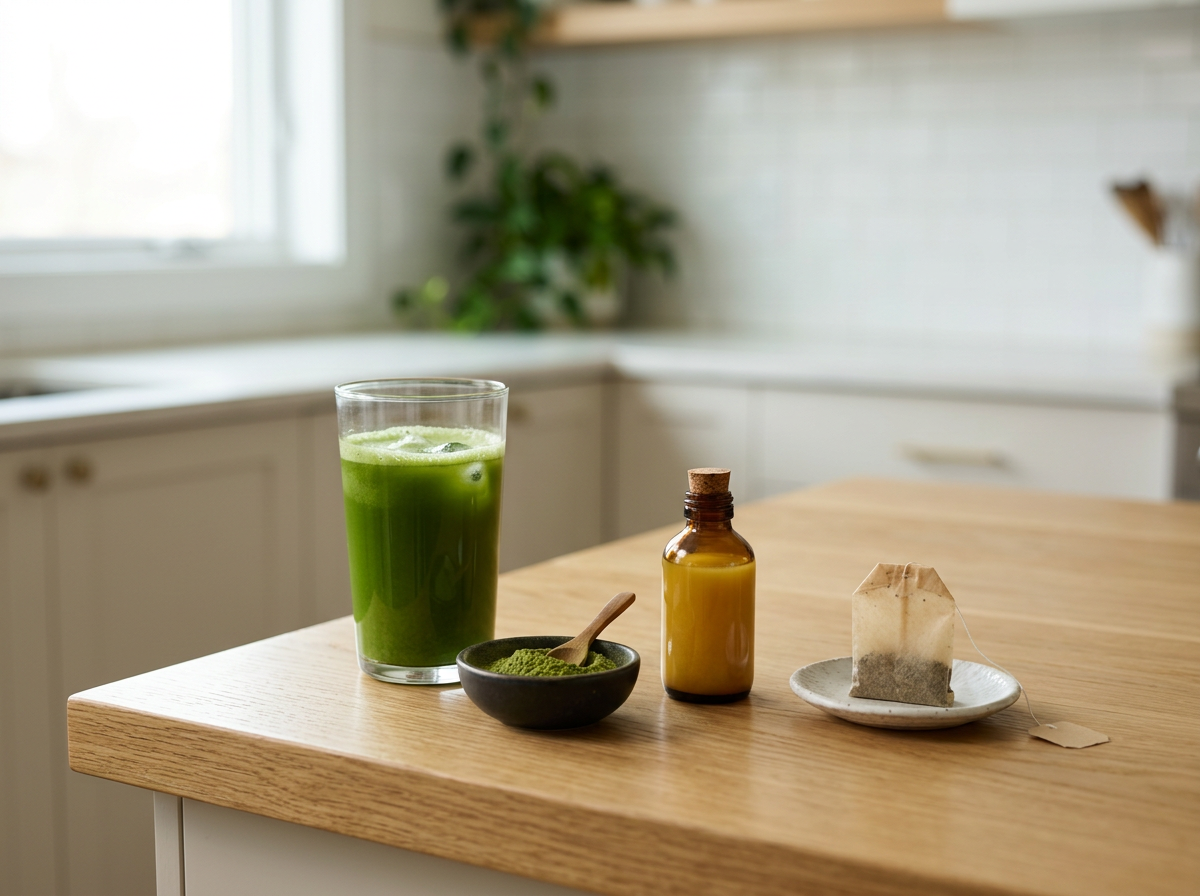
The detox industry sells you a service your body already performs. Continuously. Without instructions. For free.
Detox your body. Reset your metabolism. Cleanse away the damage. Your feed fills with debloating supplements, someone you follow is selling a powder, and there is always a reason it is the right moment to start.
Here is the part nobody selling a cleanse will tell you. Your body does not need detoxing, and the programs promising otherwise are not neutral. They set up a cycle that keeps you stuck.
Does your body actually need a detox?
No, because it is already doing it.
Your liver processes compounds through two enzyme pathways, converting them into forms your body can excrete.
Your kidneys filter about 150 quarts of blood a day, pulling out waste and excess water.
Your lungs clear metabolic waste with every exhale.
Your gut moves everything out through roughly 25 feet of intestine.
No supplement improves that system. But restriction can absolutely interfere with it, which is the irony at the centre of the whole industry.
Why do detoxes backfire?
They set up the restrict-binge spiral. A cleanse divides food into clean and toxic. Day seven ends, you eat everything that was forbidden, you feel guilty, and you start looking for the next one. That is not weakness. That is biology responding to restriction exactly as it is designed to.
They ignore your actual life. Generic elimination protocols do not account for a 3pm meeting where you need real food, a family dinner that matters more than a rule, or cultural foods that feed more than your body.
They never touch the real problem. Bloating, exhaustion and brain fog are rarely toxin buildup. They are usually eating too fast between calls, blood sugar crashing from skipped meals, not enough water, stress hormones from doing too much, or sleep lost to late-night scrolling. Juice fixes none of that.
They slow your metabolism. Severe restriction triggers survival mode. Your body breaks down muscle for fuel, hunger hormones climb, and when you eat normally again it holds onto more. You have trained your body to need less food, which is the opposite of the goal.
Do alkalizing drinks work?
No, and the reason is worth understanding because it applies to a lot of wellness marketing.
Your blood pH sits between 7.35 and 7.45, and your body defends that range with everything it has. Your lungs adjust it breath by breath through carbon dioxide. Your kidneys adjust it through what they excrete. Buffer systems in your blood handle the rest. That range is non-negotiable, because the enzyme reactions keeping you alive only work inside it.
Now consider what a drink is up against. Your stomach runs at a pH between 1.5 and 3.5. Anything alkaline you swallow meets that first and is neutralized before it goes anywhere near your bloodstream.
Here is the part that gives the game away. Sellers of alkaline products often tell you to test your urine pH as proof it is working, and your urine pH does change. But that change is your kidneys excreting the excess, which is exactly what they are supposed to do. The evidence being offered as proof the drink is working is actually proof your body is overriding it.
None of which means the drinks are harmful. Water is water, and if a nicer bottle gets you drinking more, that is a genuine win. Just do not pay a premium for a mechanism that is not happening.
The same logic covers alkaline diets. Eating more vegetables is good for you, and it is good for you because of fiber, potassium and polyphenols, not because of pH.
What about green powders?
They are not useless, but they are not vegetables either, and the gap matters more than the marketing admits.
The fiber is mostly gone. A serving of greens powder typically delivers one to two grams of fiber. A cup of broccoli gives you five. Fiber is what slows digestion, steadies blood sugar and actually keeps you full, so for anyone working on weight loss it is the single most important thing vegetables do, and it is the first thing lost in processing.
You often cannot tell what you are getting. Most of these products list a proprietary blend, which means dozens of ingredients grouped under one number. You know what is in there. You do not know how much of anything, which makes it impossible to judge whether any ingredient is at a dose that does something.
Ingredient evidence is not product evidence. A powder can contain twelve things with research behind them and still have no research behind the powder. Those are different claims, and the marketing relies on you not noticing.
And if it promises to alkalize you, that part is not happening, for all the reasons above.
Where they genuinely earn a place: travel, a stretch where you are barely eating vegetables, or as a convenient multivitamin. That is a real use, and it is a much smaller claim than the one on the tub.
What they do not do is replace the produce aisle. If a scoop is standing in for vegetables you are not eating, the powder is not the fix. The vegetables are.
What actually supports detoxification?
Support the system you already have. Five things, in order of how much they matter.
Sleep, which is the real one. Your brain has its own waste clearance network, called the glymphatic system, and it runs primarily while you sleep. It flushes metabolic debris that builds up during the day. Nothing you can buy comes close to this, and nothing replaces it. One change tonight: phone down thirty minutes earlier. More on sleep quality here.
Water, without the gallon challenge. Your kidneys need adequate fluid, not a competition. Aim for roughly half your body weight in ounces. A glass on waking, a bottle at your desk, sip when thirsty. If plain water is a struggle, or you are drinking plenty and still thirsty, electrolytes are usually the missing piece.
Food that gives your liver what it needs. Cruciferous vegetables like broccoli, cauliflower and Brussels sprouts support the enzyme pathways. Sulfur-rich foods like garlic, onions and eggs feed glutathione production. And quality protein supplies the amino acids the whole process runs on, which is one more reason protein comes first.
Movement that actually happens. Your lymphatic system has no pump, so it relies on muscle contraction to move fluid. That is the real argument for walking. Two fifteen-minute walks beat one skipped gym session, and it does not need to be complicated.
Stress, because cortisol competes. Chronic stress depletes the nutrients your liver needs for the work it is already doing. Four counts in, hold for seven, out for eight, twice. A walk around the block. Saying no to one thing. More on what stress does to weight loss.
Swaps that do more than a cleanse
For blood sugar: overnight oats become chia pudding with protein powder. A fruit smoothie becomes a balanced one. Rice cakes become flax crackers with almond butter.
For inflammation: seed oils become olive oil, though check what is actually in the bottle. Conventional dairy becomes grass-fed or A2 if you tolerate it. Farmed fish becomes wild-caught.
Notice what none of these are. Eliminations. Every one is an upgrade to something you were already eating, which is why they survive past week two.
The reset that actually lasts
Real change is addition, not subtraction.
Add vegetables to meals you already eat. Add movement that fits your day. Add sleep by subtracting scrolling. Add energy by steadying your blood sugar.
No emergency bathroom trips. No hangry afternoons. No rebound.
Your body has been detoxing this whole time. It does not need a product. It needs you to stop making its job harder.
🤎
Want tips in your inbox? Sign up for The Monthly Newsletter. No BS, only the good stuff.