Most "Avocado Oil" Products Aren't Actually Avocado Oil.
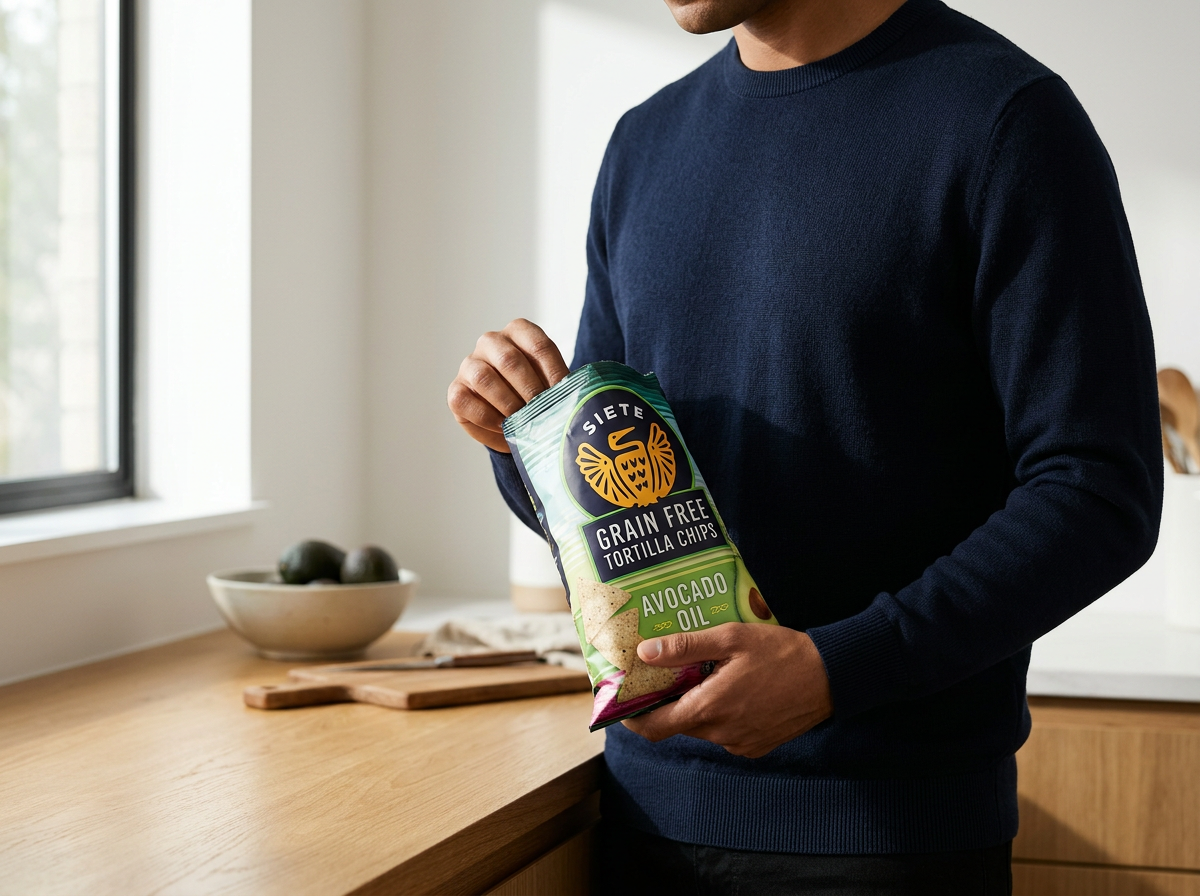
This is another reminder that you cannot take a label at its word.
I have recommended avocado oil products to clients for years, and for a real reason. Swapping out inflammatory seed oils is one of the most straightforward changes a person can make, and chronic low-grade inflammation is one of the most overlooked reasons weight will not move. When your body is busy fighting inflammation, it does not prioritise letting go of fat.
I also recommended specific brands, and I recommended them because of who they were. Primal Kitchen started with a food blogger who could not find a mayonnaise without soybean oil, so he made one. These were people solving their own problem, and you could taste the difference.
Then the cheques arrived. Kraft Heinz bought Primal Kitchen in 2019 for $201 million, the same company that makes Miracle Whip. The label stays the same, the founder story stays on the packaging, and somewhere behind it the supplier list gets renegotiated by people you will never meet.
I cannot prove the acquisition is why the oil changed. Nobody has. What I can tell you is what came out of the lab.
What did the avocado oil study find?
UC Davis tested 54 packaged foods labelled as made with avocado oil. Forty-eight were cut with cheaper oils.
93% of chips failed. 71% of mayonnaise, and among US-made mayonnaise, every single one. Salad dressings failed 100% of the time. All of them.
Inside instead were the exact oils you were paying to avoid: canola, safflower, soybean.
Led by Dr Selina Wang and published in Applied Food Research in July 2026. The products were bought in 2025 and 2026 from ordinary shops and online retailers.
Which brands passed and which failed?
Passed, consistent with authentic avocado oil
Marianne's avocado oil, used as the study's 100% pure benchmark
Grove AvoYeah! mayo sauce and garlic aioli, both matched in both tested lots
Simply Frito-Lay Tostitos Avocado Oil Tortilla Chips
LesserEvil Moonions
Failed, cut with cheaper oils
Primal Kitchen mayonnaise and dressings
Chosen Foods mayonnaise and dressings
Sir Kensington's Avocado Oil Mayonnaise
BetterBody Foods mayonnaise
Boulder Canyon Avocado Oil Kettle Chips
Kettle Brand varieties
Siete Kettle Cooked Potato Chips and Maiz Corn Tortilla Chips
Jackson's chips
Sprouts store-brand products
These results reflect the specific lots tested, not a permanent verdict on everything a brand makes. But when 48 of 54 fail, the pattern is the story.
So yes, I recommended some of these. In print, to clients, in my own pantry list. I trusted a label without asking who verifies it, and that is what I am changing.
I have rebuilt my pantry Coco’s Picks around what this study actually verified.
Why does this keep happening?
Money, and nobody checking.
Pure avocado oil costs four to five dollars a pound. Seed oils cost fifty cents to a dollar fifty. When a front-of-package claim raises the price and no one verifies it, the incentive writes itself.
The FDA has already flagged avocado oil as a frequent target for economically motivated adulteration, which is the polite term for swapping a premium ingredient for a cheap one.
This is not new either. A 2020 UC Davis study found 82% of bottled avocado oil was rancid or blended. A follow-up found 70% of store-brand oils had the same problem. Six years later it has spread from the bottle into the foods made with it.
Is olive oil affected too?
Barely, and that is the most useful part of the study.
The same team tested 20 olive oil products and only one failed. Same shelf, same price point, same kind of claim, almost none of it fraudulent.
The difference is regulation. Olive oil has standards and testing built over decades. Avocado oil has a marketing category.
The bottle is safer than the product made from it
This is the detail worth carrying out of the whole story.
Chosen Foods and Marianne's were the only two brands whose bottled avocado oil tested 100% pure in the 2020 UC Davis study. Six years later, Chosen Foods mayonnaise and dressings failed.
That is not hypocrisy, it is the supply chain. Dr Wang's own explanation is that most food companies buy oil for their manufactured products through third-party brokers, and the adulteration starts upstream with suppliers. A company can control its own bottling line and still get caught out on a condiment made elsewhere.
Which gives you a rule that will outlast this news cycle: Buy the oil. Make the condiment.
What to buy instead
Your cooking oil. Extra virgin olive oil for most cooking, which despite the myth handles ordinary sautéing and roasting perfectly well. For genuinely high heat, beef tallow, ghee, or an avocado oil with real testing behind it. Chosen Foods and Marianne's are the two bottled oils UC Davis verified pure, and both are still in my pantry. Their bottled oil is not the same product as the condiments made with it, which is exactly the distinction this study draws.
Your mayonnaise. No clean pick right now, since every US-made avocado oil mayo tested failed. I have kept Chosen Foods because their bottled oil is one of only two UC Davis verified pure and they test every batch, so I want to see how they respond to this before I drop them. Or make it, which takes ninety seconds with a stick blender:
1 whole egg, room temperature
1 cup avocado oil or light olive oil
1 tablespoon lemon juice or apple cider vinegar
1 teaspoon Dijon mustard
¼ teaspoon salt
Put everything in a tall narrow jar, the one that came with the blender is ideal. Let the egg settle at the bottom. Insert the blender all the way down, blend without moving it for about 15 seconds until the base turns white and thick, then slowly lift it to pull in the rest of the oil. Keeps in the fridge for a week.
Two things make or break it: the egg must be at room temperature, and the jar must be narrow enough that the blender head nearly touches the sides. Skip extra virgin olive oil here, it turns bitter.
Your dressing. The hardest one, because dressings failed 100% of the time and there is no bottled avocado oil dressing this study clears. Make your own instead, which takes about two minutes: lemon olive oil, ranch, caesar, green goddess and tahini are all on the site.
Your chips. Simply Frito-Lay Tostitos Avocado Oil Tortilla Chips passed the purity test, so if you want chips, buy the one that is actually what it says. But a chip fried in real avocado oil is still a chip. If you are reaching for them because you are actually hungry, the problem is not the oil, it is that there is no protein in the snack. That is what a strategic snack solves.
How to read a label from now on
Assume the front is advertising. It exists to sell, not to inform.
Look for who verified it. Brands doing this properly publish third-party testing and batch traceability. Brands that are not will call their oil premium and stop there. Useful seals: Seed Oil Free Certified, the California Olive Oil Council, the North American Olive Oil Association.
Prefer fewer steps from the plant. A bottle of oil has fewer places to hide something than a mayonnaise made with that oil, which has fewer than a chip fried in it.
Notice when a brand changes hands. It proves nothing on its own, but it is worth knowing who owns the company whose promise you are relying on.
Watch what a label leaves out. Gluten-free, fat-free, sugar-free, made with avocado oil. Every one tells you what is missing, never what is actually in the food.
The bigger point
You did the right thing. You read about seed oils, decided to avoid them, paid more to do it, and were sold seed oils anyway.
That is not a failure of your judgement. It is a failure of oversight.
It is also the argument for keeping your staples as close to whole food as possible. An avocado has no ingredient list. Neither does a bottle of olive oil from a producer who publishes their testing. The further a food travels from its original form, the more places there are for something to go quietly wrong.
Stay curious. Read the back. Ask who checked.
Everything I have verified and still stand behind is in my pantry Coco’s Picks, and I update it whenever something like this comes out.
🤎
Want tips in your inbox? Sign up for The Monthly Newsletter. No BS, only the good stuff.